TopBrokers360

Is Forex Harder Than Stocks?

Introduction

Few questions generate more debate in trading communities than: is forex harder than stocks?

Whether you’re a complete beginner trying to decide where to start or an experienced stock trader curious about currency markets, the answer matters and the truth is more nuanced than most online guides will admit. Forex and stock trading each carry their own layers of complexity, and declaring one universally harder than the other oversimplifies a decision that should be made based on your individual strengths, schedule, and risk tolerance.

In this guide, you’ll get an honest, experience-backed comparison of both markets covering leverage mechanics, market structure, information complexity, and psychological demands so you can make a fully informed choice.

Quick Answer

Forex is generally considered harder for beginners due to the extreme leverage available, the macro-economic complexity of currency pricing, and the psychological toll of 24-hour market access. However, stocks present their own steep learning curve particularly around fundamental analysis of individual companies, earnings volatility, and information asymmetry. Neither market is objectively easier; they are difficult in different ways.

Understanding the Two Markets

What Is Forex Trading?

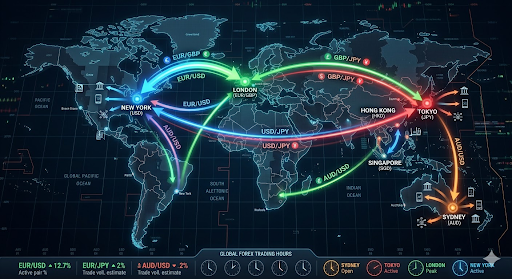
The foreign exchange (forex or FX) market is a global, decentralized marketplace where currencies are bought and sold. With an average daily trading volume exceeding $7.5 trillion (as of BIS Triennial Central Bank Survey data), it is the largest financial market in the world by a significant margin. Traders speculate on the relative value of currency pairs for example, buying EUR/USD means you’re buying euros while simultaneously selling US dollars, betting the euro will appreciate against the dollar.

Forex operates through a network of banks, brokers, and electronic communication networks (ECNs) rather than a centralized exchange, and it runs 24 hours a day from Sunday evening (Sydney open) to Friday afternoon (New York close).

What Is Stock Trading?

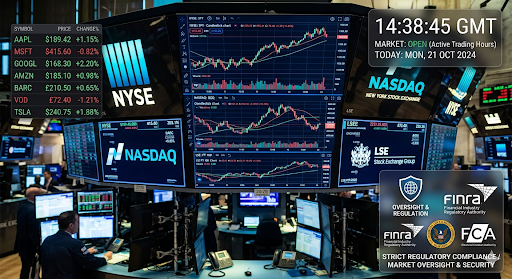
Stock trading involves buying and selling ownership shares of publicly listed companies on regulated exchanges such as the New York Stock Exchange (NYSE), NASDAQ, or the London Stock Exchange (LSE). Stock prices reflect investor sentiment about a company’s future earnings, competitive position, and broader economic conditions. Unlike forex, stock markets have fixed trading hours typically 9:30 AM to 4:00 PM EST in the US and are governed by strict regulatory oversight from bodies like the SEC.

Where Forex Is Harder Than Stocks

Leverage: Power That Can Destroy You

This is the most critical distinction between forex and stock trading for retail traders. In the United States, forex brokers are permitted to offer retail traders up to 50:1 leverage on major currency pairs. In offshore jurisdictions, that figure can reach 500:1 or higher. By contrast, US stock traders are typically limited to 2:1 leverage on margin accounts under Regulation T, with pattern day traders able to access 4:1 intraday leverage.

What does this mean in practice? Consider this scenario:

  • A stock trader with $10,000 controlling $20,000 of stock suffers a 5% adverse move: loss = $1,000 (10% of capital)
  • A forex trader with $10,000 controlling $500,000 at 50:1 leverage suffers the same 5% adverse move: loss = $25,000 wiping out their entire account and more

High leverage is seductive when trades go in your favor, and catastrophic when they don’t. Retail forex traders are notoriously prone to over-leveraging, and statistics from regulatory disclosures in the EU (required under ESMA rules) consistently show that between 70% and 80% of retail CFD/forex accounts lose money. This is not a reason to avoid forex, but it is a reason to treat leverage with deep respect and conservative position sizing.

Market Hours and Mental Fatigue

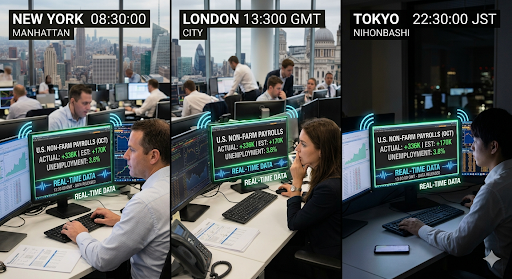
The forex market never sleeps on weekdays. While this gives traders in any time zone the ability to trade, it also creates a psychological trap: the feeling that you must always be watching the market. Experienced forex traders will tell you that the discipline required to not trade during thin overnight sessions (particularly the Asian session for USD-based traders) is just as important as knowing when to enter a position.

Stock traders benefit from clearly defined market hours. When the bell rings at 4:00 PM EST, the market closes. There’s no temptation to monitor positions through the night, no 3 AM news release from the Bank of Japan to navigate. For traders who struggle with overtrading or boundary-setting, the stock market’s schedule is a structural advantage that forex simply does not offer.

Macro Complexity: The Global Chess Game

Pricing a currency pair requires synthesizing simultaneous macro inputs from two countries at once. To trade EUR/USD intelligently, a trader needs to track:

  • Interest rate decisions and forward guidance from both the European Central Bank (ECB) and the Federal Reserve
  • Inflation data (CPI, PPI) from both the Eurozone and the US
  • Employment reports, GDP revisions, and trade balance data from both economies
  • Geopolitical developments affecting either currency bloc
  • Global risk sentiment and commodity price moves (particularly oil, which affects commodity-linked currencies like CAD and NOK)

A stock trader analyzing Apple, by contrast, can focus their research primarily on Apple’s business fundamentals, competitive landscape, and sector trends a more bounded analytical exercise.

Forex requires a systemic macroeconomic worldview. That is intellectually demanding, and many traders underestimate how quickly global events can move currency markets in ways that defy technical chart patterns.

Bid-Ask Spreads and Hidden Costs

Forex brokers typically make money through the spread of the difference between the buy (ask) and sell (bid) price of a currency pair. For major pairs like EUR/USD, spreads during liquid sessions can be as low as 0.1 to 1 pip, which appears minimal. However, frequent traders executing dozens of trades per day accumulate significant spread costs. Additionally, some brokers charge rollover fees (also called swap rates) for positions held overnight, which can erode returns in carry-unfavorable environments.

Stock traders generally pay commission (increasingly $0 at most US retail brokers), but they face their own cost structures: wider spreads on thinly traded small-cap stocks, borrowing fees for short positions, and the opportunity cost of capital tied up in slower-moving positions.

Where Stocks Are Harder Than Forex

The Sheer Volume of Securities to Analyze

The US stock market alone contains over 4,000 publicly traded companies across dozens of sectors and industries. A forex trader, by contrast, focuses on perhaps 20 to 30 meaningful currency pairs, and most active trading centers on 5 to 8 major pairs. This narrower universe makes it genuinely easier to develop deep expertise in specific market dynamics.

Stock traders face the ongoing challenge of universe selection deciding which stocks to monitor, trade, and hold. Developing a systematic screening methodology (value, momentum, growth, technical breakouts, etc.) is itself a significant undertaking that requires time, tools, and structured thinking.
Earnings Surprises and Gap Risk

Every publicly traded company reports earnings on a quarterly basis, and these events can move stock prices by 5%, 10%, 20%, or more overnight, when markets are closed. This creates gap risk: the possibility that a stock opens at a dramatically different price than where it closed, leaving stop-loss orders ineffective and traders exposed to losses far beyond their intended risk.

Currency pairs can gap too (particularly over weekends following geopolitical events), but gaps in major forex pairs are generally smaller in percentage terms than earnings-driven stock gaps. A trader holding a position in a company over its earnings release is essentially making a binary bet with asymmetric gap exposure a risk dimension that doesn’t exist in forex in the same form.

Access to Quality Information

In theory, public stock markets operate under principles of equal information access (Regulation FD in the US prohibits selective disclosure). In practice, institutional investors, hedge funds, and large asset managers employ armies of analysts, maintain relationships with company management, and use alternative data (satellite imagery, credit card transaction data, web traffic analytics) to gain informational edges that retail traders cannot match.

While retail forex traders also face institutional competition, the forex market’s primary drivers central bank policy and macroeconomic data are publicly released simultaneously to all market participants. A retail trader and a Goldman Sachs trader see the same Non-Farm Payrolls number at exactly the same moment.

Side-by-Side Comparison: Forex vs. Stocks

Factor

Forex

Stocks

Market Hours

24 hours/day, 5 days/week

Fixed hours (e.g., 9:30 AM–4:00 PM EST)

Leverage Available (US Retail)

Up to 50:1

Up to 4:1 (day trading)

Number of Instruments

~20–30 major pairs

4,000+ US stocks alone

Primary Analysis Type

Macro-economic, technical

Fundamental, technical

Earnings Gap Risk

Low (for major pairs)

High (quarterly earnings)

Information Equality

Relatively high

Institutional advantage exists

Regulatory Oversight

Varies by jurisdiction

Strong (SEC, FINRA in US)

Typical Starting Capital

Lower (micro/mini lots available)

Varies; $25K required for PDT rule

Liquidity (Major Markets)

Extremely high

High for large-caps; lower for small-caps

Overnight Risk

Swap/rollover fees; weekend gaps

Earnings gaps; after-hours moves

Learning Curve Focus

Macro, central bank policy, correlations

Company analysis, sector trends, balance sheets

Retail Loss Rate (EU disclosures)

70–80% lose money

Data varies; consistent profitability is rare

Who Is Each Market Best Suited For?

Forex may be better suited for you if:

  • You have a strong interest in global macroeconomics, central banking, and geopolitics
  • You want to trade with a smaller initial capital base and access high liquidity
  • You prefer having a smaller universe of instruments to master deeply
  • You are comfortable with a 24-hour market and have the discipline to set firm trading hours for yourself
  • You thrive with technical analysis and are comfortable with data releases as volatility catalysts

Stocks may be better suited for you if:

  • You have a background in business, accounting, or financial analysis and enjoy researching companies
  • You prefer defined market hours with clear boundaries between trading and non-trading time
  • You are a longer-term investor who wants to build positions over weeks, months, or years
  • You want the ability to invest in sectors or themes you understand from your professional or personal life
  • You are risk-averse about leverage and prefer regulated, exchange-based trading

Common Mistakes Beginners Make in Both Markets

Understanding where beginners go wrong is as valuable as understanding market mechanics. These patterns appear consistently across both asset classes:

In Forex:

  • Over-leveraging immediately using 50:1 or higher leverage before understanding position sizing and risk management
  • Trading all sessions failing to recognize that not all forex sessions offer equal opportunity; the London-New York overlap is typically most liquid for major pairs
  • Ignoring swap rates holding high-yield-differential pairs without accounting for rollover costs that compound over time
  • Chasing news attempting to trade central bank announcements without a structured plan, leading to reactive, emotional decision-making

In Stocks:

  • Buying on hype entering positions in heavily discussed stocks (social media, forums) without independent research
  • Holding through earnings without a plan neither closing positions before earnings nor defining an acceptable loss if the move goes against you
  • Violating the Pattern Day Trader (PDT) rule US traders with accounts under $25,000 are limited to 3 day trades in a rolling 5-day period; violating this triggers restrictions
  • Neglecting position sizing concentrating too heavily in single names without portfolio-level risk management

Real-World Scenarios: How Difficulty Plays Out in Practice

Scenario 1 The Beginner Forex Trader: Marcus opens a forex account with $2,000 and, attracted by the 50:1 leverage, immediately trades standard lots worth $100,000 per position. A 50-pip adverse move wipes out $500 25% of his account. This is not unusual. Most professional forex traders risk no more than 1–2% of capital per trade, meaning Marcus should be trading nano or micro lots until he builds both capital and consistency. The leverage that attracted him becomes his primary obstacle.

Scenario 2 The Beginner Stock Trader: Sarah has $15,000 and invests heavily in a mid-cap biotech company two weeks before its FDA decision. The drug trial fails; the stock gaps down 60% at open. Her stop-loss order (set at 10% below entry) executes far below that level due to the gap, resulting in a loss of nearly $7,000 in a single session. The binary, event-driven nature of individual stock analysis created a risk she hadn’t fully modeled. No amount of technical analysis could have prepared her for a regulatory outcome.

Scenario 3 The Experienced Transition: Elena has five years of stock trading experience and decides to try forex. Her advantage: she already understands risk management, position sizing, and how to detach emotionally from individual trades. Her challenge: she initially applies stock-style fundamental analysis to currency pairs and is frustrated when “cheap” currencies don’t appreciate the way undervalued stocks might. She has to relearn her analytical framework from scratch, a humbling experience that takes several months.

These scenarios underscore a core truth: experience in one market does not fully transfer to the other. Each requires its own deliberate learning process.

Conclusion

So is forex harder than stocks? The honest answer is: it depends on your starting point, your strengths, and how you define difficulty.

Forex is harder in the sense that its leverage mechanics can destroy accounts quickly, its macro complexity demands a broad understanding of global economics, and its 24-hour nature creates unique psychological pressures. Stocks are harder in the sense that the analytical universe is vastly larger, earnings-driven gap risk is unpredictable, and institutional information advantages are real.

What both markets have in common is this: consistent profitability in either requires time, structured learning, disciplined risk management, and a trading plan you can execute without letting emotion override your rules. There are no shortcuts, and the market that feels “easier” to enter is rarely the one that’s easier to profit from consistently.

Before choosing a market, be honest with yourself about:

  • Your available learning time and trading schedule
  • Your capital base and risk tolerance
  • Whether you’re drawn to company-level or macro-level analysis
  • Whether you have the psychological discipline to manage leverage responsibly

If you’re still uncertain, consider paper trading (simulated trading without real money) in both markets for 30–60 days before committing real capital. This hands-on experience will reveal far more about your natural fit than any article can.

Author

Reach the new peaks of trading with FXNovus

Online broker of a new generation. Creating a new trading reality

Scroll to Top