Introduction
Octa (rebranded from OctaFX) and LiteFinance (rebranded from LiteForex) are two of the most recognizable brokers in emerging markets, both built around the same formula: tiny minimum deposits, high leverage, copy trading and a mobile-first experience aimed at traders in Asia, Africa and Latin America. Choosing between them comes down to pricing structure, account variety and how you weigh their respective trust profiles.
Octa is the better choice for cost-conscious traders who want simplicity. Its single commission-free account structure delivers EUR/USD spreads from 0.6 pips (independent tests averaged around 0.8 to 0.9 pips), swap-free trading on every instrument by default, a $25 minimum deposit and a genuinely modern proprietary platform in OctaTrader. The important counterweight: its regulation is lighter than LiteFinance’s European arm for most clients, and industry watchdogs have logged reported enforcement friction in India and recurring user withdrawal complaints that a trustworthy comparison must mention.
LiteFinance is the better choice for traders who want structural variety and a longer pedigree. Operating since 2005, it offers a proper ECN account with raw spreads, a Cent account for micro-risk practice from $10, a CySEC-regulated European entity, cTrader alongside MT4/MT5, and one of the most complete copy trading ecosystems in this bracket, though its commission-free Classic account (spreads from 1.8 pips) is markedly more expensive than Octa’s, and its ECN commissions run above the industry’s cheapest.
Neither broker belongs on a shortlist with FCA or ASIC tier-1 champions, and both demand eyes-open due diligence. Within their shared arena, the detailed comparison below shows exactly where each wins.
Comparison Table
| Feature | Octa (OctaFX) | LiteFinance |
|---|---|---|
| Founded | 2011 | 2005 (as LiteForex) |
| Headquarters | International entity offshore; EU entity in Cyprus | Global entity in St Vincent; EU entity in Cyprus |
| Regulation | CySEC (372/18), MISA (Comoros), FSCA | CySEC (093/08), FSC Mauritius, SVG registration |
| Publicly Listed | No | No |
| Minimum Deposit | $25 | $10 (Cent), $50 (Classic/ECN) |
| Trading Platforms | MT4, MT5, OctaTrader | MT4, MT5, cTrader, proprietary social platform |
| Tradable Assets | Approx. 230 to 300 instruments | Approx. 190 to 600 instruments (entity dependent) |
| Maximum Leverage | Up to 1:500 (higher advertised in some regions) | Up to 1:1000 offshore; 1:30 EU retail |
| Spreads | From 0.6 pips (approx. 0.8 to 0.9 avg EUR/USD) | Classic from 1.8 pips; ECN from 0.0 (approx. 0.2 avg) |
| Commissions | None on any account | None on Classic/Cent; per-lot commission on ECN |
| Swap Fees | None, swap-free on all instruments | Standard swaps (swap-free variants available) |
| Inactivity Fee | None published | $10 per month on dormant accounts |
| Account Types | MT4, MT5, OctaTrader (all Standard-style) | Classic, ECN, Cent, Islamic |
| Demo Account | Yes, free | Yes, free |
| Islamic Account | All accounts swap-free by default | Yes, swap-free variants |
| Copy Trading | Yes, Octa Copytrading (1,500+ masters) | Yes, flagship social trading platform |
| Social Trading | Yes | Yes, ranked strategy marketplace |
| Mobile Trading | Yes, Octa app with OctaTrader | Yes, LiteFinance app (4.6 rated) |
| Desktop Platform | MT4, MT5 | MT4, MT5, cTrader |
| Web Platform | OctaTrader web | Proprietary web platform |
| Educational Resources | Multilingual webinars, 11-lesson course, Space feed | Analysis portal, education hub |
| Research Tools | Space analytics, Autochartist (Status Program) | Daily analysis, signals, calculators |
| Customer Support | 24/7 | 24/7 multilingual |
| Deposit Methods | Cards, Skrill, Neteller, local banks, crypto | Cards, wire, WebMoney, AliPay, crypto, M-Pesa, Sticpay |
| Withdrawal Methods | Same as deposits, fees reimbursed | Same as deposits, fees reimbursed; automatic payouts |
| Processing Time | Instant to 3 business days | Instant (automated) to 3 business days |
| Investor Protection | ICF for CySEC-entity clients only | ICF for CySEC-entity clients only |
Conditions vary by entity and change often. Confirm current figures on the official Octa and LiteFinance websites before opening an account.
Company Overview
Octa (OctaFX)
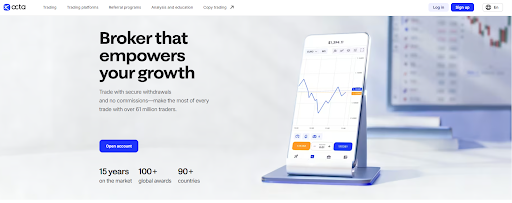
Founded in 2011 and rebranded from OctaFX to Octa, the broker has become a fixture in high-growth markets, with the company reporting more than 40 million accounts opened across 180 countries and independent trackers counting over 12 million active trading accounts and roughly $9 billion in monthly volume. Its model is deliberately simple: one Standard-style account per platform (MT4, MT5 or OctaTrader), zero commissions, zero swaps on every instrument, and no deposit or withdrawal fees, with Octa even reimbursing payment-processor charges.
Its proprietary OctaTrader platform is the modern centerpiece: TradingView-powered charting, the Space analytics feed with daily technical and fundamental ideas from in-house analysts, and copy trading through the Octa Copytrading app, where over 1,500 master traders can be mirrored. A Status loyalty program layers on perks such as Autochartist signals and spread discounts. Education is unusually localized, with weekly webinars in English, Malay, Thai, Spanish and Portuguese.
The trust file requires honesty. Octa’s European entity, Octa Markets Cyprus Ltd, holds a CySEC license (372/18), but most international clients trade under offshore entities regulated by the Mwali International Services Authority (Comoros) alongside an FSCA registration in South Africa, jurisdictions offering limited investor protection. Industry watchdogs have also documented reported enforcement actions in India, where authorities seized assets connected to the brand amid an investigation into unlicensed operations, with reports that CySEC subsequently curbed the owner’s control over the Cyprus entity to preserve compliance, and recurring user complaints about blocked or delayed withdrawals. Octa disputes individual cases and continues to operate at scale, but prospective clients should weigh these reports alongside the attractive trading conditions.
LiteFinance
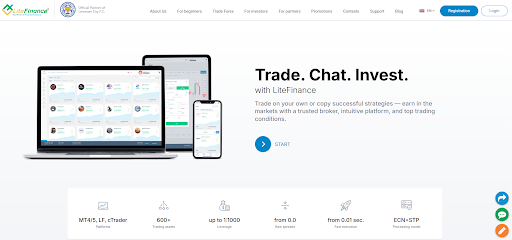
LiteFinance began life as LiteForex in 2005, making it one of the longest-running retail forex brands anywhere, founded by Aleksey Smirnov and rebranded in 2021. It reports millions of registered clients, offices across 15 countries including Thailand, Vietnam and Singapore, and a long award shelf headlined by Best ECN Broker in Asia and Best Forex Brokerage in MENA honors.
Where Octa strips choice away, LiteFinance layers it on. Traders pick between a commission-free Classic account (spreads from 1.8 pips), a genuine ECN account routing orders to liquidity providers with raw spreads from 0.0 pips (independent tests averaged around 0.2 pips on EUR/USD) plus per-lot commissions, and a Cent account from just $10 that denominates balances in cents for near-riskless practice on live markets. The ECN account even pays 2.5% interest on surplus funds. Platform coverage recently expanded beyond MT4 and MT5 to include cTrader, alongside a proprietary web and mobile platform whose social trading marketplace, with ranked strategy providers and one-click copying, is the company’s flagship feature and its highly rated app (4.6 stars, 500,000+ downloads) its main storefront.
Regulation mirrors Octa’s structure: LiteForex (Europe) Ltd holds CySEC license 093/08 with ICF protection for EU clients, while LiteFinance Global LLC in St Vincent and the Grenadines, supported by an FSC Mauritius license, serves the international majority with far lighter oversight. Its two-decade record is comparatively quiet on enforcement, though the offshore structure imposes the same caveats as every broker in this class.
Regulation & Safety
Neither broker offers tier-1 protection to most of its clients, so this section is about degrees.
LiteFinance holds the stronger overall file: a CySEC license dating to 2008 (093/08) with Investor Compensation Fund coverage up to EUR 20,000 for eligible EU clients, an FSC Mauritius license, and a 20-year operating history without headline enforcement actions. The catch is universal to its class: most global clients sit under the St Vincent entity, where the FSA functions as a registry rather than a conduct regulator, leaving fund segregation and negative balance protection as company policy rather than statutory rights.
Octa likewise offers a CySEC-regulated route (372/18) for EU clients with ICF coverage, while its international majority trades under MISA in the Comoros and an FSCA footprint, light-touch regimes with no compensation schemes. It segregates client funds and voluntarily extends negative balance protection. Set against that are the reported India enforcement actions, the reported CySEC intervention regarding the owner’s control of the Cyprus entity, and a pattern of withdrawal complaints on watchdog platforms that sits uneasily beside its otherwise polished operation and 15-year history.
Trust verdict: LiteFinance, on the strength of its longer, quieter record and equivalent-or-better licensing. EU-eligible clients of either broker should insist on the CySEC entity. Traders for whom regulatory strength is the top priority should candidly consider brokers outside this bracket altogether.
Trading Products
Octa keeps the menu tight: roughly 230 to 300 instruments comprising around 35 forex pairs, 30+ cryptocurrency CFDs (tradable 24/7 with leverage up to 1:200), about 100 US stock CFDs, major indices and core commodities (gold, silver, Brent crude, natural gas). The philosophy is low spreads on popular markets rather than breadth; the trade-off is real, with exotic pairs, bonds, ETFs and broader share coverage absent, and independent testing flagging elevated spreads on crude oil and some indices.
LiteFinance ranges from roughly 190 instruments on its core lists to several hundred depending on entity: 55+ forex pairs, stock CFDs, global indices, metals, energies and cryptocurrencies (crypto leverage up to 1:50). Neither broker offers real share ownership, options or futures.
Verdict: broadly comparable, with LiteFinance slightly wider on forex pairs and Octa slightly stronger on crypto conditions. Multi-asset depth is not why anyone chooses either broker.
Trading Platforms
Octa fields MT4, MT5 and OctaTrader. The proprietary platform is the standout in this matchup: TradingView charting technology, the integrated Space analytics feed, one-app account management, funding and trading, plus AI-flavored tooling. Copy trading runs through the dedicated Octa Copytrading app. EAs and algorithmic strategies live on MT4/MT5, with MT5 offering depth of market and 21 timeframes for scalpers.
LiteFinance counters with MT4, MT5, the recently added cTrader, a rarity in this segment and a genuine draw for ECN-style traders, and its proprietary web and mobile social platform, where the strategy marketplace, sentiment tools and copy portfolio management reside. VPS hosting supports automated trading around the clock.
Verdict: Octa for the best single proprietary experience; LiteFinance for platform breadth, especially cTrader, and the deeper copy trading infrastructure. MetaTrader users are fully served at both.
Trading Costs
This is where the two brokers genuinely diverge.
Commission-free trading. Octa’s spreads from 0.6 pips, with independent live testing averaging 0.8 to 0.9 pips on EUR/USD, make it one of the cheapest commission-free brokers anywhere, roughly 18% under the industry’s Standard-account average, with stable spreads recorded across sessions. LiteFinance’s Classic account starts at 1.8 pips (tests average around 1.9), roughly double Octa’s real-world cost, and its Cent account runs from 3.0 pips. For spread-only traders, Octa wins decisively.
Raw pricing. Only LiteFinance offers it. The ECN account delivers spreads averaging around 0.2 pips on EUR/USD plus per-lot commissions that vary by instrument group; published and tested figures range from a low headline minimum to roughly $5 per lot on major pairs and more on crosses and minors, which is workable but above the $6 to $7 round-turn benchmarks of the cheapest ECN brokers. Verify the current commission schedule for your instruments before committing volume. Octa has no raw account at all, a real gap for high-frequency traders.
Swaps and non-trading fees. Octa’s structural trump card: swap-free trading on every instrument for every client, at no extra charge, plus no deposit, withdrawal or inactivity fees, with third-party processor costs reimbursed. For swing and position traders who hold for days or weeks, eliminating swaps can outweigh any spread difference. LiteFinance charges standard swaps (triple on midweek rollover days) with swap-free variants available, reimburses deposit and withdrawal costs, and applies a $10 monthly inactivity fee to dormant accounts.
| Cost Item | Octa | LiteFinance |
|---|---|---|
| Commission-free EUR/USD | From 0.6 pips (approx. 0.8 to 0.9 avg) | From 1.8 pips (approx. 1.9 avg) |
| Raw/ECN option | Not offered | From 0.0 pips + per-lot commission |
| Overnight swaps | None on all instruments | Standard (swap-free variants available) |
| Deposit/withdrawal fees | None, processor fees reimbursed | None, processor fees reimbursed |
| Inactivity fee | None published | $10 per month |
| Interest on idle funds | No | 2.5% on ECN surplus funds |
Cost verdict: Octa for spread-only and swing traders; LiteFinance only pulls ahead for disciplined high-volume traders who exploit the ECN account’s raw spreads and confirm its commissions fit their instruments.
Account Types
Octa offers one account concept dressed three ways, MT4, MT5 and OctaTrader accounts, all commission-free, all swap-free, all from a $25 minimum, in USD or EUR. There are no ECN, cent or tiered accounts; a Status loyalty program adds perks (signals, spread discounts, personal manager) as trading volume accumulates, and non-EU clients periodically receive deposit bonus promotions (with the usual volume conditions attached).
LiteFinance runs a proper ladder:
- Cent: $10 minimum, cent-denominated balances, spreads from 3.0 pips, ideal for testing strategies with pocket change.
- Classic: $50 minimum, commission-free, spreads from 1.8 pips, MT4/MT5.
- ECN: $50 minimum, raw spreads plus commission, direct liquidity routing, 2.5% interest on surplus funds.
- Islamic: swap-free variants of Classic and ECN.
- Demo: free on all platforms.
| Account Feature | Octa | LiteFinance |
|---|---|---|
| Minimum deposit | $25 | $10 (Cent) / $50 (Classic, ECN) |
| Cent account | No | Yes |
| ECN/raw account | No | Yes |
| Swap-free | All accounts by default | On request |
| Deposit bonuses | Yes (non-EU promotions) | Occasional contests/promotions |
| Leverage ceiling | Up to 1:500+ (region dependent) | Up to 1:1000 offshore |
Deposits & Withdrawals
Both brokers built their reputations on frictionless funding in markets where global brokers struggle.
Octa supports cards, Skrill, Neteller, Perfect Money, FasaPay, cryptocurrencies and an extensive network of local bank and wallet rails across Asia and Africa. Deposits are typically instant; withdrawals process from within hours up to three business days, with Octa charging nothing and reimbursing processor fees. The counterpoint, repeated for fairness: watchdog platforms carry a meaningful volume of user complaints alleging delayed or blocked withdrawals, particularly around large profits and KYC reviews, so keep documentation immaculate and test the withdrawal pipeline early with modest amounts.
LiteFinance supports cards, bank wire, WebMoney, AliPay, Perfect Money, Sticpay, M-Pesa and direct Bitcoin/Ethereum funding, with automated instant withdrawals for verified clients up to daily limits, a genuinely useful feature, and zero fees either direction. PayPal is absent at both brokers.
| Funding Feature | Octa | LiteFinance |
|---|---|---|
| Cards / e-wallets | Yes, wide local coverage | Yes, wide local coverage |
| Crypto funding | Yes | Yes (BTC, ETH and more) |
| M-Pesa / regional rails | Yes (varies) | Yes |
| Broker fees | None, reimburses processors | None, reimburses processors |
| Automated instant withdrawals | No | Yes, for verified clients |
Research & Education
Octa invests heavily here for its audience: the Space feed delivers daily technical and fundamental analysis inside the platform, weekly webinars run in five languages, an 11-lesson structured video course covers charting, fundamentals and psychology, and Autochartist signals unlock through the Status program. For an emerging-markets beginner broker, the package is genuinely strong.
LiteFinance operates a long-running analysis portal with daily forecasts, trading signals, an economic calendar and calculators, plus an education hub aimed at beginners. Competent and regularly updated, though less multilingual and less integrated into the trading experience than Octa’s Space.
Verdict: Octa, narrowly, for localization and in-platform integration; LiteFinance remains solid.
Customer Support
Both brokers run 24/7 multilingual support with live chat as the primary channel. Independent testing rates both as responsive on routine platform and funding queries. The asymmetry appears in dispute handling: watchdog-site records show more unresolved escalations against Octa (largely withdrawal-related), while LiteFinance’s complaint file is thinner for its age. Neither offers the phone-desk depth of tier-1 brokers.
| Support Channel | Octa | LiteFinance |
|---|---|---|
| Live chat | Yes, 24/7 | Yes, 24/7 |
| Yes | Yes | |
| Phone | Limited | Limited |
| Languages | Extensive (Asia-focused) | Extensive |
Mobile Trading Experience
Octa’s unified app is the best single mobile product in this comparison: OctaTrader with TradingView charts, Space analytics, funding, account management and support in one place, with the separate Copytrading app for mirroring masters. It reflects where the broker’s audience actually trades: on phones.
LiteFinance’s app (rated around 4.6 with 500,000+ downloads) integrates its social trading marketplace elegantly, with 190+ instruments, 100+ graphical tools and 75 indicators, plus MT4/MT5/cTrader mobile for traditionalists. Slightly less polished than Octa’s, considerably more copy-trading-centric.
Verdict: Octa for pure trading UX; LiteFinance for mobile copy trading.
Pros & Cons
Octa (OctaFX)
Pros
- Among the tightest commission-free spreads anywhere (approx. 0.8 to 0.9 pips EUR/USD tested)
- Swap-free trading on all instruments by default, ideal for swing traders
- No deposit, withdrawal or inactivity fees; processor fees reimbursed
- Modern OctaTrader platform with TradingView charts and Space analytics
- $25 minimum, 24/7 support, strong localized education in five languages
- Copy trading with 1,500+ master traders
Cons
- Light regulation for most clients (MISA Comoros); CySEC route for EU only
- Reported enforcement action in India and reported CySEC curbs on owner control
- Recurring user withdrawal complaints on watchdog platforms
- No ECN/raw account and a narrow instrument range (no ETFs, bonds, exotics)
- Elevated spreads on crude oil and some indices
- Bonus promotions carry volume conditions that can mislead beginners
LiteFinance
Pros
- Operating since 2005 with a comparatively quiet regulatory record
- Real ECN account with raw spreads (approx. 0.2 pips avg) and direct liquidity
- Cent account from $10, perfect for low-risk live practice
- MT4, MT5, cTrader and a flagship social copy trading platform
- Automated instant withdrawals for verified clients; fees reimbursed both ways
- 2.5% interest on ECN surplus funds; VPS for algos
Cons
- Classic account spreads (from 1.8 pips) are roughly double Octa’s real cost
- ECN commissions above the cheapest raw-pricing brokers; schedule varies by instrument
- Most global clients sit under the lightly regulated St Vincent entity
- $10 monthly inactivity fee on dormant accounts
- No tier-1 (FCA/ASIC) licensing anywhere in the group
- Proprietary platform trails OctaTrader in polish
Who Should Choose Octa?
Choose Octa if you trade the major markets, hold positions overnight and want the lowest all-in cost without thinking about account types. The swap-free-everything policy quietly saves swing traders more than headline spreads suggest, the 0.8 to 0.9 pip commission-free pricing beats most Standard accounts outright, and OctaTrader is the nicest phone-first platform in this class. It suits beginners in Asia, Africa and Latin America who value localized education and funding rails. Go in with discipline: prefer the CySEC entity if eligible, verify identity fully before depositing meaningfully, withdraw profits regularly, and size your exposure knowing the offshore protections are thin.
Who Should Choose LiteFinance?
Choose LiteFinance if you want room to grow within one broker. Absolute beginners can start on a $10 Cent account with real market data and negligible risk, graduate to Classic, and eventually run raw-spread ECN strategies on cTrader or MT5 with VPS support, a progression Octa’s one-size structure cannot offer. Copy trading investors get the deeper marketplace, and anyone who values a broker’s longevity will note the 20-year record. Active traders should do the commission math on their specific pairs before committing, and everyone outside the EU should understand they are trading under the St Vincent entity’s lighter rules.
Final Verdict
Octa wins on trading conditions; LiteFinance wins on structure and record.
For the typical trader in these brokers’ core markets, someone trading majors commission-free from a phone, Octa’s tighter spreads, universal swap-free policy and zero non-trading fees make it the cheaper, slicker choice, provided its reported trust issues are weighed honestly and managed with sensible withdrawal habits.
For traders who want an ECN path, a cent-account on-ramp, cTrader, or simply the reassurance of a brand that has operated since 2005 without comparable controversy, LiteFinance is the more complete and arguably the safer pick, at the cost of higher spreads on its entry account.
Both are offshore-first brokers with high leverage, and the standard warning carries extra weight here: leveraged CFD trading wipes out a large majority of retail accounts, protections outside the EU entities are limited, and you should never fund either broker with money you cannot afford to lose.
Frequently Asked Questions
Is Octa (OctaFX) or LiteFinance cheaper?
For commission-free trading, Octa: tested EUR/USD spreads of 0.8 to 0.9 pips versus 1.9 pips on LiteFinance’s Classic account, plus zero swaps on everything. LiteFinance can be cheaper for high-volume traders using its ECN account (raw spreads around 0.2 pips plus commission), which Octa does not offer.
Are these brokers well regulated?
Both hold CySEC licenses for EU clients (Octa 372/18; LiteFinance 093/08) with ICF protection, but most international clients trade under offshore entities, MISA Comoros for Octa, St Vincent registration plus FSC Mauritius for LiteFinance, with limited statutory protection. Neither holds FCA or ASIC licenses.
Is Octa safe? What about the India reports?
Octa has operated since 2011, segregates funds and provides negative balance protection, but industry watchdogs have documented reported asset-seizure actions in India over unlicensed operations, reported CySEC measures concerning the owner’s control of the Cyprus entity, and recurring user withdrawal complaints. These reports do not prove wrongdoing in any individual case, but they belong in any honest risk assessment.
What are the minimum deposits?
Octa: $25 on all account types. LiteFinance: $10 for the Cent account and $50 for Classic and ECN accounts.
Which broker is better for copy trading?
LiteFinance has the deeper ecosystem, with its social platform’s ranked strategy marketplace at the heart of the product. Octa’s Copytrading app (1,500+ master traders) is simpler and well executed. Beginners will find Octa’s easier; committed copy investors will prefer LiteFinance’s tooling.
Do these brokers charge swap fees?
Octa charges no swaps on any instrument for any client, a standout policy for overnight traders. LiteFinance charges standard swaps (tripled on midweek rollover) with swap-free Islamic variants available on request.
Which platforms are supported?
Octa: MT4, MT5 and its proprietary OctaTrader (TradingView charting). LiteFinance: MT4, MT5, cTrader and its proprietary social trading platform. Only LiteFinance offers cTrader; only Octa offers a TradingView-charting proprietary terminal.
How high is the leverage?
Octa offers up to 1:500 for most international clients (higher tiers are advertised in some regions); LiteFinance offers up to 1:1000 offshore. EU retail clients of both are capped at 1:30. Remember that leverage of this magnitude can erase an account in a single adverse move.
Are there inactivity or withdrawal fees?
Octa charges neither, and reimburses payment-processor costs. LiteFinance also keeps funding free both ways and reimburses processor fees, but applies a $10 monthly inactivity fee to dormant accounts.
Can I trade crypto at both brokers?
Yes. Octa offers 30+ crypto CFDs tradable 24/7 with leverage up to 1:200. LiteFinance offers major crypto CFDs with leverage up to 1:50 and also accepts Bitcoin and Ethereum for funding.
Do Octa and LiteFinance accept US clients?
No. Neither broker accepts US residents, and both maintain further restricted-country lists tied to sanctions and local licensing.
Which broker is better for complete beginners?
Octa for simplicity: one account type, $25 entry, swap-free everything, localized education and the friendliest app. LiteFinance for safer skill-building: the $10 Cent account lets beginners trade live markets with cent-sized risk, something Octa cannot match.