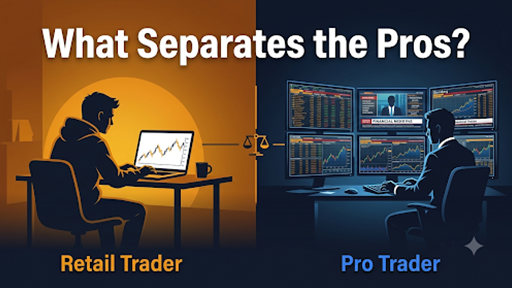
Copy trading has transformed retail participation in financial markets. Instead of developing their own strategies, traders can automatically mirror the positions of experienced investors in real time. But is copy trading actually profitable? And which platforms give you the best chance of success? In this evidence-based guide, we answer both questions directly.
What Is Copy Trading?
Copy trading is a form of social or mirror trading where your brokerage account automatically replicates the trades of a selected ‘signal provider’ or ‘master trader.’ When the person you copy opens a buy order for EUR/USD at 2% of their portfolio, your account executes the same trade proportionally. Your gains and losses mirror theirs in real time.
This is distinct from copy-cat trading (manual observation) and PAMM accounts (where a manager trades a pooled fund). In copy trading, your capital remains in your own account — you retain control and can stop copying at any time.
Best Copy Trading Platforms 2026
Platform
Type
Min Deposit
Regulation
Fee Model
Best For
eToro
Proprietary social trading
$50
FCA, CySEC, ASIC
Spread-based
Beginners
NAGA
Social + copy trading
$250
CySEC, BaFin
Spread + commission
Active traders
ZuluTrade
Third-party network
$100
HCMC, FSA
Pip-based subscription
Wide signal access
Darwinex
Managed accounts (DARWINs)
$500
FCA
20% performance fee
Sophisticated investors
MetaTrader Signals
MT4/MT5 built-in
Varies
Varies by broker
Monthly subscription
MT4/MT5 users
Myfxbook AutoTrade
EA-based copying
$1,000
N/A (third-party)
Spread-based
Verified track records
Pepperstone + ZuluTrade
Integrated copy service
$200
FCA, ASIC
ZuluTrade fees apply
Regulated copy trading
How Does Copy Trading Work in Practice?
Step 1: Choose Your Platform
Different platforms have different signal providers, fee structures, and underlying broker relationships. eToro’s closed ecosystem is simpler for beginners; ZuluTrade’s open network offers more provider choice.
Step 2: Evaluate Signal Providers
This is the most critical step. Most platforms display performance statistics for every signal provider. Do not rely on short-term returns alone. Analyse: trading history length (minimum 12 months), maximum drawdown, number of copiers, asset classes traded, and risk score.
Step 3: Allocate Capital
Determine how much of your account to allocate per signal provider. Diversifying across 3–5 uncorrelated providers is generally preferable to concentrating all capital on one trader.
Step 4: Monitor and Adjust
Copy trading is not fully passive. You should review performance monthly, replace underperforming providers, and adjust allocations as your risk tolerance changes.
Is Copy Trading Profitable? The Honest Answer
Copy trading can be profitable — but the majority of retail copy traders do not profit. Here is why:
Past performance of signal providers does not guarantee future results. A trader who returned 200% in one year may blow their account the next.
Survivorship bias is endemic on copy trading platforms. You see the winners prominently displayed; the 80% of signal providers who failed have been delisted.
Copier-provider timing mismatches are common. By the time a trade appears in your account, the best entry point may have passed — particularly for scalpers.
Fees erode returns. Spread costs, subscription fees, and performance fees can consume 20–50% of gross returns.
Statistics to Know
A 2023 review of eToro’s public data found that approximately 70% of accounts that copy other traders underperform a simple buy-and-hold strategy on the same assets over a 12-month period. This does not mean copy trading cannot work — it means copy trading without due diligence rarely works.
How to Maximise Your Chances of Success
Prioritise drawdown over returns — A signal provider with 40% annual return and 60% maximum drawdown is a ticking time bomb. Seek providers with returns above 20% and drawdown below 20%.
Look for consistent, low-volatility growth — A smooth equity curve growing 2% per month is far more reliable than one that spikes and craters.
Diversify across providers and asset classes — No single signal provider should represent more than 30% of your allocated copy trading capital.
Set copy stop loss limits — Most platforms allow you to set a maximum loss at which copying automatically stops. Use this.
Understand what you are copying — At minimum, know whether your provider trades news events, uses grid strategies, or holds positions overnight. Each carries different risks.
Copy Trading vs Managing Your Own Trades
Copy trading is best viewed as a complement to, not a replacement for, your own trading education. The most successful retail traders use copy trading as a bridge — a way to generate returns while studying the market and developing their own skills. Using copy trading as a permanent crutch, with no understanding of the strategies being replicated, is a high-risk approach.