Introduction
Before comparing, the essential update: TD Ameritrade no longer exists as a standalone broker. Charles Schwab completed the migration of all TD Ameritrade accounts in May 2024 and retired the TDA brand, while preserving its celebrated thinkorswim platform, including its full futures trading capability, for every Schwab client. So the real 2026 question behind this search is: AMP Futures vs Charles Schwab (thinkorswim), a specialist deep-discount futures broker against a full-service giant whose platform happens to be superb at futures. They are built for different traders, and the split is unusually clean.
AMP Futures is the better broker for dedicated, cost-sensitive futures traders. The Chicago-based, CFTC/NFA-regulated Futures Commission Merchant charges commissions from roughly $0.42 to $0.44 per contract on micros, about one fifth of Schwab’s $2.25, backs it with a public match-or-beat pricing guarantee, offers day trading margins as low as $40 on the Micro E-mini S&P 500 and $400 on the full E-mini, opens accounts from $100, and connects you free of platform fees to more than 50 professional platforms (Sierra Chart, MultiCharts, Quantower, MetaTrader 5, TradingView and dozens more) across CQG, Rithmic, TT and Teton data feeds.
TD Ameritrade’s successor, Schwab, is the better broker for traders who want futures beside everything else. thinkorswim delivers the most polished discretionary futures experience in retail brokerage, with paperMoney simulation, elite charting and options-on-futures analytics, inside one account that also holds your stocks, options, IRAs and banking, backed by 24/7 branch-supported service and the education library AMP simply does not have. You pay for it: $2.25 per contract per side and conventional margin treatment.
If futures are your profession or serious pursuit, AMP’s economics are close to unanswerable. If futures are one room in a larger financial house, or you are still learning, stay with Schwab. The complete breakdown follows.
Comparison Table
| Feature | AMP Futures | TD Ameritrade (now Charles Schwab) |
|---|---|---|
| Founded | Chicago FCM (AMP Global Clearing LLC) | TDA 1975; Schwab 1971; migration completed May 2024 |
| Regulation | CFTC, NFA (FCM), CME Group member | SEC, FINRA, CFTC/NFA (futures via Schwab entities) |
| Publicly Listed | No (private FCM) | Yes, NYSE: SCHW |
| Business Focus | Futures and options on futures only | Full-service: stocks, ETFs, options, futures, forex, funds, banking |
| Minimum Deposit | $100 | $0 (futures approval required) |
| Futures Commissions | From approx. $0.42 to $0.44 per contract (plus exchange/NFA fees) | $2.25 per contract per side (plus exchange/NFA fees) |
| Pricing Guarantee | Match or beat any written quote (or 20 free trades) | None |
| Day Trading Margins | From $40 (MES), $400 (ES) | Exchange-based; intraday reductions for qualified accounts only |
| Overnight Margins | Full exchange margins | Full exchange margins |
| Platforms | 50 to 60+ free (Sierra Chart, Quantower, MT5, TradingView, MultiCharts, CQG, more) | thinkorswim (desktop, web, mobile) |
| Data Feeds | CQG, Rithmic, TT, Teton | Integrated (thinkorswim) |
| Options on Futures | Yes | Yes, with elite analytics |
| Other Asset Classes | None | Full US menu |
| Paper Trading | Via supported platforms/feeds | paperMoney, unlimited real-time |
| Automation/API | Extensive (platform and feed APIs) | Limited (thinkorswim not automation-first) |
| Inactivity/Platform Fees | None | None |
| Withdrawal Fees | Wire fees apply; ACH available | Free ACH; wire fees standard |
| Funding Methods | ACH, wire (no cards) | ACH, wire, check, internal transfers |
| Customer Support | 24-hour trade desk, chat, phone | 24/7 phone/chat, branches |
| Education | Minimal | Extensive |
| Client Fund Protection | CFTC customer segregation (no SIPC for futures) | CFTC segregation for futures; SIPC on securities side |
| Best For | Active/professional futures and algo traders | Multi-asset traders, learners, discretionary futures |
Details change frequently. Confirm current pricing, margins and terms on the official AMP Futures and Charles Schwab websites before opening an account.
What Happened to TD Ameritrade?
Charles Schwab acquired TD Ameritrade in a deal announced in 2019 and completed the final client migration in May 2024, retiring the TD Ameritrade platform, apps and brand. For futures traders, the two things that mattered survived: thinkorswim, whose futures and options-on-futures trading moved to Schwab intact (desktop, web and mobile, with paperMoney simulation and no platform or data fees for standard use), and TDA’s futures pricing, which carried over at $2.25 per contract per side. Futures and forex are offered through Schwab’s CFTC/NFA-registered entities under the same login as securities accounts. In short: everything a TD Ameritrade futures trader had still exists, it just says Schwab on the door, and this comparison evaluates it in that current form.
Company Overview
AMP Futures
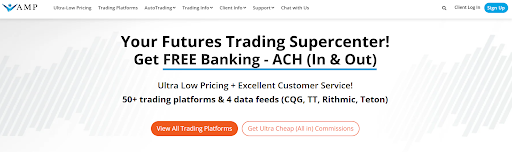
AMP Global Clearing LLC, trading as AMP Futures, is a Chicago-based Futures Commission Merchant regulated by the CFTC, a member of the NFA and of CME Group exchanges, serving individual traders, introducing brokers, CTAs and API developers worldwide. It is a pure specialist: futures and options on futures across seven asset classes (equity indices, rates, currencies, energies, metals, agriculture and more), on US and international exchanges, and nothing else.
Its identity rests on three pillars. First, price: commissions start around $0.42 to $0.44 per contract on micros before exchange and NFA fees, among the lowest in the industry, backed by a standing offer to match or beat any written commission quote or hand you 20 commission-free trades. Second, margins: AMP’s day trading margins are famously minimal, $40 for the Micro E-mini S&P 500 and $400 for the full E-mini S&P, in effect during both day and overnight sessions except the final five minutes before each daily close, enforced by a 100% margin-call and 50% auto-liquidation regime with a strict “5-minute rule” around session ends. Third, platform freedom: more than 50 (by some counts 60+) trading platforms connect free of monthly platform fees, from Sierra Chart, MultiCharts and Quantower to MetaTrader 5, TradingView, CQG Desktop and MotiveWave, across four data feeds (CQG, Rithmic, Trading Technologies, Teton), making AMP the most platform-neutral futures broker in existence and a natural home for automated strategies.
The honest ledger’s other side: education is minimal and the firm assumes you already know futures; account opening and compliance checks draw recurring complaints for slowness; support, though staffed 24 hours with a trade desk, tests uneven at peak times; funding is ACH or wire only (no cards), wire withdrawals carry fees; and, as at every futures broker, there is no SIPC-style compensation scheme, client funds sit in CFTC-mandated customer-segregated accounts instead.
TD Ameritrade / Charles Schwab
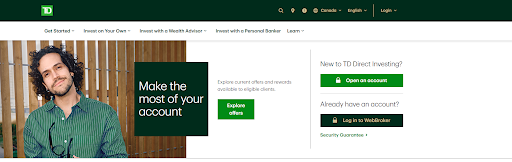
Charles Schwab, TD Ameritrade’s successor, is the largest retail brokerage complex in the United States: NYSE-listed, trillions in client assets, branches nationwide, 24/7 human support, and the #1 Overall ranking in StockBrokers.com’s 2026 review. Futures trading lives inside thinkorswim, the platform Schwab preserved from TDA, and it remains the most refined discretionary futures environment in retail brokerage: professional charting with hundreds of studies, the Active Trader ladder for DOM-style order entry, futures options chains with the signature Risk Profile P&L visualization, thinkScript customization, scanners, OnDemand market replay, and paperMoney, an unlimited real-time simulator that is simply the best free practice environment anywhere.
The futures offering covers CME Group’s full retail menu, including the micro E-mini complex, micro crypto futures, metals, energies and rates, plus options on futures, at $2.25 per contract per side with no platform or data fees. Margins follow exchange requirements, with intraday reductions available only to qualified accounts under Schwab’s policies, nothing approaching AMP’s $40 micro margins. Around the futures desk sits everything AMP lacks: the education library, futures specialists on 24/7 phones, integration with stock, options, IRA and banking accounts, and the institutional stability of a systemically significant public company. The costs are the mirror image: commissions roughly five times AMP’s on micros, conservative margin treatment, and a platform that, for all its brilliance, is built for discretionary trading rather than the automated strategies AMP’s ecosystem serves natively.
Regulation & Safety
Both firms operate under the same US futures framework, which makes this section about structure rather than tier.
AMP Futures is a registered FCM under CFTC oversight and NFA membership (verifiable in the NFA BASIC database), clearing through major exchanges as a CME Group member. Client funds are held in customer-segregated accounts as US commodity law requires, the core protection of the futures world, with daily seg reporting to regulators. What does not exist, at AMP or any futures broker: SIPC coverage or a compensation fund; futures customer protection rests on segregation, FCM capital rules and regulatory supervision.
Schwab offers the identical CFTC/NFA segregation regime on its futures side, wrapped in a materially larger balance sheet: a NYSE-listed parent with audited accounts and excess capital that dwarfs any specialist FCM, plus SIPC and excess-SIPC protection on the securities side of the same relationship (futures positions themselves remain outside SIPC everywhere). For traders who weight counterparty scale heavily, Schwab’s size is a genuine, quantifiable comfort.
Trust verdict: both are properly regulated US futures brokers with clean standing; Schwab adds public-company scale, AMP adds specialist focus. Neither is a risk outlier, and both should be verified in NFA BASIC as routine hygiene.
Trading Products
AMP Futures covers the futures universe and only the futures universe: equity index futures from micros to full size, interest rates, FX futures, energies, metals, agriculture and softs, volatility products, plus options on futures, across CME, CBOT, NYMEX, COMEX and accessible international exchanges (Eurex and others via supported feeds). Micro contracts, including CME’s newest small products, arrive promptly. There are no stocks, ETFs, equity options, mutual funds or spot forex, by design.
Schwab offers a comparable retail futures menu (CME Group’s core plus micros and options on futures; some far-flung international products are thinner) inside a brokerage that also carries every US-listed stock and ETF, the full equity options universe, 8,000+ mutual funds, bonds, spot-style forex via thinkorswim and crypto exposure through futures and ETFs. One login, one statement, one tax package.
Verdict: for pure futures breadth the two are close, with AMP slightly deeper internationally; for everything else there is no contest, because AMP does not compete.
Trading Platforms
The philosophical gap is the story here.
AMP Futures is platform-agnostic infrastructure. Choose among 50 to 60+ front ends, Sierra Chart for tick-level precision, Quantower and MultiCharts for modern multi-asset workflows, MetaTrader 5 for EA-style automation, TradingView for chart-native simplicity, CQG’s professional stack, and dozens more, all free of monthly platform fees for AMP clients (premium add-ons and exchange data fees can apply), riding CQG, Rithmic, TT or Teton connectivity chosen to match your latency and API needs. Automated systems, trade copiers and VPS-hosted strategies are first-class citizens. The cost of freedom is assembly: you pick, configure and learn your stack, and AMP’s guides help without hand-holding.
Schwab is the opposite bet: one integrated masterpiece. thinkorswim’s futures experience, ladder trading, futures options analytics with Risk Profile curves, custom thinkScript studies, OnDemand replay and paperMoney, is the most polished single environment a retail futures trader can open, at zero platform cost, in identical form on desktop, web and mobile. What it is not: automatable at AMP’s level, connectable to third-party execution tools, or suited to latency-sensitive systematic trading.
Verdict: systematic, platform-particular and professional traders need AMP’s openness; discretionary traders, chart craftsmen and futures-options specialists will prefer thinkorswim, and beginners should learn there.
Trading Costs
Commissions. The headline gap: AMP charges from roughly $0.42 to $0.44 per contract on micro contracts (all-in totals add exchange, clearing and NFA fees identical in kind at any broker), against Schwab’s $2.25 per contract per side. On a Micro E-mini round turn, that is roughly $0.88 at AMP versus $4.50 at Schwab in broker commissions, a five-to-one difference. A trader doing 200 round turns monthly pays about $176 at AMP and $900 at Schwab, roughly $8,700 per year apart, before AMP’s match-or-beat guarantee is even invoked. Full-size contracts scale similarly. No pricing nuance rescues Schwab here; its futures commissions fund the ecosystem, not the execution.
Margins. The second decisive gap for day traders. AMP’s day margins, $40 MES, $400 ES, and similar fractions elsewhere, apply through both sessions (except the final five minutes), letting small accounts trade professionally sized strategies with strict discipline; overnight positions revert to full exchange margins (MES maintenance around $2,465), so the advantage is purely intraday. Schwab applies exchange-based margins with limited intraday concessions for qualified accounts, meaning the same $2,500-ish commitment per micro that AMP asks $40 for intraday. For swing traders holding overnight, the brokers converge; for day traders, AMP’s capital efficiency is transformative, and correspondingly dangerous without risk control.
Non-trading costs. AMP charges no inactivity, platform or deposit fees; wire withdrawals carry fees (ACH is the cheap rail), and premium platform modules or exchange data subscriptions cost extra where selected. Schwab charges no inactivity, platform or data fees for standard thinkorswim use, free ACH both ways, and standard wire fees. Idle cash earns little at either in futures accounts; Schwab’s securities side offers easy money-fund parking that AMP cannot.
| Cost Item | AMP Futures | Schwab (TDA successor) |
|---|---|---|
| Micro contract commission | From approx. $0.42 to $0.44/contract | $2.25/contract per side |
| Approx. MES round turn (broker fees) | Approx. $0.88 | $4.50 |
| Pricing guarantee | Match or beat any written quote | None |
| Day margin, MES / ES | $40 / $400 | Exchange-based (limited reductions) |
| Overnight margins | Full exchange | Full exchange |
| Platform fees | None (50+ platforms) | None (thinkorswim) |
| Inactivity fee | None | None |
| Withdrawals | ACH cheap; wires fee-bearing | ACH free; wires standard |
Cost verdict: AMP, by the widest margin in this entire fifteen-article series, on both commissions and intraday capital efficiency. Schwab’s futures pricing is the toll for its ecosystem.
Account Types
AMP Futures offers individual, joint, corporate, trust and IRA futures accounts (IRAs via custodian partners), plus professional structures for CTAs, introducing brokers and API developers. The $100 minimum opens an account; the practical minimum to trade is the day margin of your chosen contract plus sensible cushion. Demo trading runs through the supported platforms and feeds.
Schwab layers futures approval onto its universal account menu: individual, joint, trust, corporate and the full retirement suite (futures in IRAs subject to approval), beside banking, 529s and advisory options. paperMoney provides unlimited simulated futures trading with real-time data, the best risk-free on-ramp in the industry.
| Account Feature | AMP Futures | Schwab |
|---|---|---|
| Minimum to open | $100 | $0 (approval required) |
| IRA futures | Yes (custodian partners) | Yes (approval) |
| Professional/CTA/IB infrastructure | Yes, extensive | Limited |
| Paper trading | Platform-dependent demos | paperMoney (best in class) |
| Multi-asset integration | No | Full |
Deposits & Withdrawals
AMP Futures funds by ACH (free or near-free, the recommended rail) and bank wire in multiple major currencies; cards are not accepted. Withdrawals process on business days with wire fees applying, and ACH again the economical path. Same-day wires meet standard FCM cutoffs.
Schwab offers free ACH, standard wires, check deposits, branch services and instant internal transfers between securities, futures and banking sides, domestic convenience AMP does not attempt. Neither charges deposit fees; both enforce standard AML name-matching.
Research & Education
Schwab wins overwhelmingly. The education library spans beginner courses through advanced futures and options-on-futures instruction, live coaching and webcasts; research integrates Schwab commentary, news and screeners; and paperMoney turns theory into safe practice. It is the right place to become a futures trader.
AMP Futures provides platform guides, margin and exchange documentation, market notices and a knowledge base, competent operational material for people who already trade, with market education explicitly not the product. Reviewers, including our own TopBrokers360 assessment, consistently flag this as its main gap for newcomers.
Verdict: learn at Schwab; execute at AMP is a defensible life plan.
Customer Support
AMP Futures runs a 24-hour trade desk with phone, live chat, email and remote-desktop assistance, genuinely valuable when a platform misbehaves mid-session, and its chat and desk help draw praise in user feedback. The recurring criticisms: uneven response speed at busy times and slow account-opening compliance.
Schwab operates 24/7 phone and chat with futures specialists, plus branches, the deepest service organization in retail brokerage, with post-migration wait-time grumbles the only consistent blemish.
Verdict: Schwab for depth and consistency; AMP’s trade desk is nonetheless a real asset for its audience.
Mobile Trading Experience
Schwab’s thinkorswim mobile delivers full futures trading, ladders, futures options chains and paperMoney on the phone, the best mobile futures experience in US retail.
AMP relies on its platforms’ mobile editions (CQG Mobile, Quantower, TradingView and others), functional and feed-synced, but assembled rather than integrated, and reviewers rate the pieces below thinkorswim’s polish.
Verdict: Schwab, clearly, for mobile-first traders; AMP’s clientele mostly trades from desktops anyway.
Pros & Cons
AMP Futures
Pros
- Commissions from ~$0.42 to $0.44 per contract, with a public match-or-beat guarantee
- Day margins from $40 (MES) and $400 (ES): unmatched intraday capital efficiency
- 50 to 60+ free platforms across CQG, Rithmic, TT and Teton feeds
- CFTC/NFA-regulated FCM and CME member with customer-segregated funds
- $100 minimum, no inactivity or platform fees, 24-hour trade desk
- First-class home for automated and professional futures strategies
Cons
- Futures only: no stocks, ETFs, equity options or broader ecosystem
- Minimal education; explicitly not beginner-friendly
- Account opening/compliance and support speed draw recurring complaints
- Wire withdrawal fees; ACH/wire funding only, no cards
- Ultra-low margins are a loaded weapon without strict risk discipline
- Premium platform modules and exchange data can add costs
TD Ameritrade (now Charles Schwab)
Pros
- thinkorswim: the most polished discretionary futures and futures-options platform, free
- paperMoney unlimited real-time simulation, the industry’s best training ground
- Full-service ecosystem: stocks, options, IRAs, banking, branches beside futures
- 24/7 specialist support and the deepest education library in brokerage
- NYSE-listed scale with SIPC on the securities side of the relationship
- Micro futures and options on futures with elite analytics
Cons
- $2.25 per contract per side: roughly five times AMP on micros
- Exchange-based margins; nothing like AMP’s $40 day margins
- Not built for automated or platform-particular futures strategies
- No pricing guarantee or volume-tier relief for active futures traders
- Migration-era service friction still echoes in reviews
- Futures feel like a department, not the mission
Who Should Choose AMP Futures?
Choose AMP if futures execution is the job. Day traders get the industry’s most efficient capital treatment ($40 to control a Micro E-mini intraday) and commissions that stop being a strategy tax; systematic traders get feed-level choice (Rithmic for speed, CQG for reliability, TT for professional tooling) beneath whichever of 50+ platforms their code already speaks; scalpers and high-volume traders get the match-or-beat guarantee as a standing discount; and small accounts get a $100 door into professional infrastructure. Come prepared: know your platform, automate your risk limits (AMP’s 50% auto-liquidation and 5-minute rule will enforce what you do not), keep education sourced elsewhere, and fund by ACH to dodge wire fees. Former TDA futures traders whose commissions genuinely matter will find the switch pays for itself within weeks.
Who Should Choose TD Ameritrade (Schwab)?
Stay with Schwab if futures are part of your portfolio rather than your profession. Learners get paperMoney, courses and 24/7 specialists, the safest possible path into a dangerous instrument class; discretionary traders get thinkorswim’s charts, ladders and futures-options analytics in one beautiful environment; options-on-futures strategists get Risk Profile visualization no AMP-connected platform matches for intuitiveness; and households get futures on the same statement as stocks, IRAs and banking. The $2.25 commissions sting only at volume: a few round turns weekly costs coffee money, and the ecosystem’s value swamps it. If you later turn professional, the graduation path to AMP (or a similar specialist) will be obvious, and thinkorswim will have taught you what to demand.
Final Verdict
This is the cleanest verdict of the series, because the brokers barely overlap.
AMP Futures wins for anyone whose futures volume or margin usage is real. Five-to-one commission savings, $40 micro day margins, platform freedom and a pricing guarantee make it, together with a handful of fellow specialists, the rational endpoint for serious futures traders, provided you bring your own education and discipline.
Schwab, TD Ameritrade’s heir, wins for everyone else in this search: beginners, diversified investors adding micros, discretionary chartists and futures-options traders who value thinkorswim, paperMoney and full-service support over per-contract pennies that their volume never turns into real money.
Many traders sensibly do both in sequence, learn and simulate at Schwab, execute at scale at AMP, or in parallel. Whichever you choose, respect the instrument: futures are leveraged contracts on which losses can exceed deposits, AMP’s low margins amplify both directions violently, and no commission schedule ever rescued a trader from poor risk management. Verify current pricing, margins and regulatory standing (NFA BASIC) on the official sites before funding.
Frequently Asked Questions
Is TD Ameritrade still available for futures trading?
Not as TD Ameritrade. Schwab completed the migration in May 2024 and retired the TDA brand, but preserved thinkorswim and its full futures and options-on-futures capability for all Schwab clients at the legacy $2.25 per-contract pricing. Comparing “AMP Futures vs TD Ameritrade” today means comparing AMP against Schwab’s thinkorswim offering.
How much cheaper is AMP Futures than TD Ameritrade/Schwab?
Roughly five times cheaper on broker commissions: from about $0.42 to $0.44 per contract at AMP versus $2.25 per side at Schwab (exchange, clearing and NFA fees apply equally at both). A 200-round-turn-per-month micro trader saves on the order of $8,700 per year at AMP, and AMP will match or beat any written quote besides.
What are AMP’s day trading margins?
Among the industry’s lowest: $40 for the Micro E-mini S&P 500 (MES) and $400 for the full E-mini (ES), in effect through day and overnight sessions except the final five minutes before each daily close. Overnight positions require full exchange margins (MES maintenance around $2,465), and AMP enforces a 100% margin-call level with auto-liquidation at 50%.
Which has the better platform?
Different questions. For one integrated discretionary platform, Schwab’s thinkorswim is the retail gold standard, with paperMoney simulation and superb futures-options analytics. For choice and automation, AMP’s 50 to 60+ free platforms (Sierra Chart, Quantower, MultiCharts, MT5, TradingView, CQG and more) across four data feeds have no equal among futures brokers.
Is AMP Futures safe and regulated?
Yes. AMP Global Clearing LLC is a CFTC-regulated Futures Commission Merchant, an NFA member (verifiable in NFA BASIC) and a CME Group member, holding client funds in customer-segregated accounts as US law requires. Note that no futures account anywhere carries SIPC coverage; Schwab’s futures side operates under the same segregation regime, with SIPC applying only to its securities accounts.
What are the minimum deposits?
AMP requires $100 to open and maintain data connectivity, with the practical trading minimum being your contract’s day margin plus cushion. Schwab has no account minimum, though futures trading requires approval and appropriate funding for exchange margins.
Can beginners use AMP Futures?
They can, but mostly should not start there. AMP provides minimal education and assumes platform and risk competence; its ultra-low margins magnify beginner mistakes. The sensible path is learning and simulating on Schwab’s thinkorswim paperMoney (or equivalent), then graduating to AMP when volume makes its pricing matter.
Does either broker charge platform or inactivity fees?
No. AMP charges no monthly platform fees on its 50+ platforms and no inactivity fees (premium modules and exchange data subscriptions cost extra where chosen). Schwab’s thinkorswim is free with no inactivity fees. AMP’s wire withdrawals carry fees, so use ACH; Schwab’s ACH is free both ways.
Can I trade stocks or options at AMP Futures?
No. AMP is futures and options on futures only. Schwab offers the full multi-asset menu (stocks, ETFs, equity options, funds, bonds, forex) beside its futures desk, the core structural difference in this comparison.
Which is better for automated futures trading?
AMP, decisively. Its Rithmic, CQG, TT and Teton connectivity plus API-friendly platforms (Sierra Chart, MultiCharts, MT5, Quantower and others) make it a standard back-end for automated futures strategies. thinkorswim is engineered for discretionary trading and offers no comparable automation path.
Do both offer micro futures and options on futures?
Yes. Both provide CME’s micro complex (including MES, MNQ, micro crypto and metals) and options on futures. Schwab’s futures-options analytics are friendlier; AMP’s execution costs are far lower.
Should former TD Ameritrade futures traders switch to AMP?
Run the numbers: multiply your monthly round turns by roughly $3.60 saved per micro round turn (more on full-size contracts), and weigh it against losing thinkorswim, paperMoney and integrated service. Volume traders and day traders relying on margin efficiency should switch, or add AMP alongside; occasional hedgers and futures-options traders are usually better off staying.
Risk warning: Futures and options on futures trading involves substantial risk of loss and is not suitable for all investors; losses can exceed your deposits, and low day trading margins amplify both gains and losses dramatically. Past performance does not guarantee future results. This article is for informational purposes only and does not constitute investment advice. Verify all commissions, margins, fees and regulatory records (via NFA BASIC and FINRA BrokerCheck) on the official AMP Futures and Charles Schwab websites before opening an account, and trade only with capital you can afford to lose.