Introduction
FBS and HF Markets (rebranded HFM, formerly HotForex) are two of the biggest names in emerging-market forex: both founded around 2009 to 2010, both built on MetaTrader, cent accounts, high leverage and heavy education, and both serving millions of traders across Asia, Africa, the Middle East and Latin America. They are direct competitors for the same client, which makes the differences that do exist unusually decision-relevant.
HFM is the better broker for most traders. It carries the stronger regulatory stack (FCA, CySEC, DFSA, FSCA and more, against FBS’s CySEC, ASIC and Belize), a product shelf roughly twice as deep at 1,000+ instruments including bonds, ETFs and soft commodities, a genuine raw-pricing Zero account at $6 round turn available globally, and the built-in HFcopy and PAMM ecosystems that FBS lacks. Independent testing recorded ECN spreads from 0.1 pips with sub-0.3-second execution, and its Trustpilot rating stands at 4.8.
FBS is the better broker for micro-budget beginners and maximum-leverage seekers. Its $5 minimum deposit is among the lowest anywhere, leverage reaches an industry-extreme 1:3000, its award-winning FBS App pays cashback of up to 20% of the spread, and it charges no inactivity fee where HFM charges $5 per month after six dormant months. The counterweight: a narrower instrument list, no raw-spread account outside Australia, and a complaint record on watchdog platforms (withdrawal delays, bonus-term disputes, slippage allegations) that runs heavier than HFM’s.
Both are offshore-first brokers where your entity determines your protection. Within that shared reality, HFM is the more complete operation and FBS the more accessible one. The evidence follows.
Comparison Table
| Feature | FBS | HF Markets (HFM) |
|---|---|---|
| Founded | 2009 | 2010 (as HotForex) |
| Headquarters | Belize (group entities in Cyprus, Australia) | Cyprus/SVG group structure |
| Regulation | CySEC, ASIC, FSC Belize, FSCA | FCA, CySEC, DFSA, FSCA, FSA Seychelles, FSC Mauritius, CMA |
| Publicly Listed | No | No |
| Minimum Deposit | $5 ($50 AU; EUR 100 EU) | $0 (Cent/Premium); $100 Pro; approx. $200 Zero |
| Trading Platforms | MT4, MT5, FBS App | MT4, MT5, HFM App, WebTrader, HFcopy |
| Tradable Assets | 550+ CFDs | 1,000+ instruments |
| Maximum Leverage | Up to 1:3000 (offshore) | Up to 1:2000 (offshore) |
| Spreads | Standard from 0.7 to 0.8 pips | Premium from 1.2; Pro from 0.5; Zero from 0.0 |
| Commissions | None (Ultra AU: approx. AUD 8 RT) | None on spread accounts; approx. $6 RT on Zero |
| Inactivity Fee | None | $5/month after 6 months dormant |
| Account Types | Standard, Cent (Ultra in AU; regional variants) | Cent, Premium, Pro, Pro Plus, Zero, HFcopy, PAMM, VIP |
| Demo Account | Yes, unlimited | Yes, unlimited |
| Islamic Account | Yes | Yes |
| Copy Trading | No native platform (cashback instead) | Yes, HFcopy plus PAMM |
| Social Trading | Limited | Yes |
| Bonuses/Rewards | Frequent promos, up to 20% spread cashback | HF Bars rewards, regional bonuses |
| Mobile Trading | FBS App (award-winning) | HFM App |
| Desktop Platform | MT4, MT5 | MT4, MT5 |
| Web Platform | MT4/MT5 web | HFM WebTrader, MT web |
| Educational Resources | Extensive, beginner-focused | Extensive, plus 18+ trading tools |
| Research Tools | Analysis, calendar, signals | Autochartist, Sentiment Trader, analysis |
| Customer Support | 24/7 multilingual | 24/5 multilingual, well rated |
| Deposit Methods | Cards, e-wallets, local methods, crypto | Cards, wire, Skrill, Neteller, crypto, local methods |
| Withdrawal Methods | Same, no broker fees | Same, broker covers fees |
| Processing Time | Minutes to 2 days (method dependent) | E-wallets same day; cards/wire 2 to 7 days |
| Investor Protection | ICF (CySEC entity); segregation varies by entity | ICF (CySEC entity); segregated funds group-wide |
Conditions vary by entity and change often. Confirm current figures on the official FBS and HFM websites before opening an account.
Company Overview
FBS
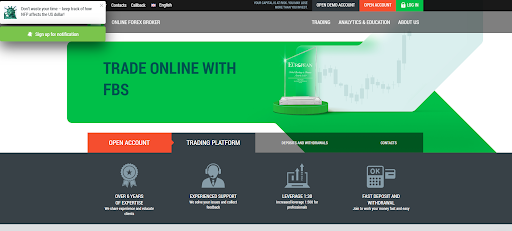
FBS launched in 2009 under Belize-registered FBS Markets Inc and grew into one of the most recognizable retail brands in the developing world, reporting more than 27 million registered clients across 150+ countries, 90+ industry awards and a steady flow of new signups that few rivals match. Its formula has never changed: a $5 minimum deposit, leverage up to 1:3000, commission-free Standard pricing from about 0.7 to 0.8 pips, relentless promotion, and education pitched squarely at first-time traders.
The corporate structure spans three regulatory tiers: Tradestone Ltd under CySEC for Europe, Intelligent Financial Markets Pty under ASIC for Australia (where the raw-spread Ultra account lives, at roughly AUD 8 round turn), and the Belize FSC entity serving the global majority with the headline leverage and $5 entry. Platforms are MT4, MT5 and the proprietary FBS App, a genuinely polished mobile product covering 150+ instruments with an unusual perk: cashback of up to 20% of the spread on positions opened through it. Non-trading costs are exemplary, with no deposit, withdrawal or inactivity fees.
The honest counterweight sits in the complaint file. Watchdog platforms document a meaningful volume of user allegations against FBS: withdrawal delays and verification holds, bonus terms complicating payouts, slippage and stop-loss disputes, and contested profit adjustments. These are allegations rather than findings, and they must be read against a client base in the tens of millions, but their recurrence, alongside the note that the Belize entity’s fund-segregation standards trail the group’s regulated arms, belongs in any trustworthy assessment.
HF Markets (HFM)
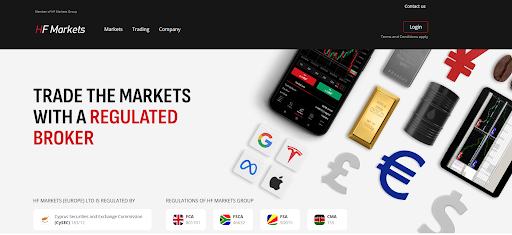
HF Markets launched as HotForex in 2010 and rebranded to HFM as it matured from a high-leverage MT4 shop into a diversified multi-asset group. Today it reports millions of accounts across 180+ countries, monthly volume beyond $100 billion, 80+ awards and a 4.8 Trustpilot rating, with regulation spread across the FCA (UK), CySEC (183/12), Dubai’s DFSA, South Africa’s FSCA (46632), the FSA Seychelles, FSC Mauritius and Kenya’s CMA, one of the broader license maps in the offshore-serving segment, though ASIC is absent.
The product depth is its calling card. Beyond 50 to 100+ forex pairs, HFM lists 1,000+ stock CFDs, 20+ commodities including soft markets like cocoa and coffee that FBS skips entirely, index CFDs, ETFs, bonds and 20+ cryptocurrencies. The account ladder runs from a zero-minimum Cent account through Premium (from about 1.2 pips), Pro (from roughly 0.5 pips, $100 minimum) and Pro Plus (tested near 0.2 pips), to the Zero account with raw spreads plus about $6 round turn, available globally rather than in one region. Around the trading core sit HFcopy (a native copy-trading platform where strategy providers earn performance fees), PAMM managed accounts, free VPS, Autochartist and Sentiment Trader tools, and the HF Bars loyalty program that converts traded volume into redeemable rewards. Independent testing recorded ECN-account spreads from 0.1 pips on EUR/USD with execution under 0.3 seconds and no requotes.
Its weaknesses are the mirror image of its strengths: entry-tier spreads (Premium from 1.2 to 1.4 pips) trail cost leaders, some accounts run on a market-maker model with its inherent conflict, and a $5 monthly fee bites accounts left dormant for six months.
Regulation & Safety
Neither broker offers tier-1 protection to its core clientele, so the comparison is about breadth, record and structure.
HFM holds the wider and stronger map: FCA and CySEC at the top tier, DFSA and FSCA in the middle, and Seychelles, Mauritius and Kenyan entities for the global majority. Client funds are segregated group-wide, negative balance protection applies, CySEC clients get ICF coverage up to EUR 20,000, and the group’s 16-year record is comparatively quiet, with its complaint volume modest for its size. The standard caveat applies with force: most clients trade under the Seychelles or Mauritius entities, where statutory compensation does not exist.
FBS counters with CySEC and, notably, ASIC, a license HFM lacks, plus the Belize FSC for its global business and an FSCA footprint. EU clients get ICF protection and Australian clients get ASIC’s regime. The concerns concentrate offshore: reviewers note that fund segregation at the Belize entity does not match the regulated arms, a Malaysian regulatory disclosure sits on its watchdog file, and the user-complaint record, particularly around withdrawals, bonus terms and execution disputes, runs heavier than HFM’s. Negative balance protection applies across entities.
Trust verdict: HFM, on license breadth, product-supplier structure and complaint history. FBS remains a legitimate, long-established broker, but the gap here is real, and at both firms the entity shown at signup matters more than the brand.
Trading Products
HFM roughly doubles FBS’s shelf: 1,000+ instruments spanning 50 to 100+ currency pairs (with deep exotics), 1,000+ share CFDs across US, UK and European markets, 20+ commodities including energies, metals and rare-for-this-segment softs (cocoa, coffee, sugar), major indices, ETFs, government bonds and 20+ crypto CFDs (unavailable under the EU entity).
FBS lists around 550 CFDs: roughly 70 forex pairs, precious metals (gold, silver, platinum, palladium), three energy products, a modest index range, US and international stock CFDs, and crypto CFDs by region. Reviewers consistently flag the thin commodity and index coverage, and there are no ETFs, bonds or soft commodities.
Verdict: HFM, comfortably, for anyone trading beyond core forex and metals.
Trading Platforms
Both are MetaTrader houses with proprietary mobile apps; the differences sit at the edges.
FBS offers MT4 and MT5 in full (EAs, hedging, scalping unrestricted, execution from around 10 milliseconds) plus the FBS App, the best proprietary product in this matchup: award-winning design, 150+ instruments, integrated funding, education and the unique 20% spread-cashback feature for in-app trading. There is no copy-trading platform, no cTrader and no TradingView.
HFM offers MT4 and MT5 with a broader symbol list, the HFM App and WebTrader for account-integrated trading, and, decisively, the HFcopy platform (follow strategy providers from low minimums, or earn performance fees as one) plus PAMM accounts for managed money. Free VPS supports algorithmic trading, and the platform suite integrates Autochartist and Sentiment Trader. No cTrader or TradingView here either.
Verdict: FBS for the single best mobile app; HFM for ecosystem breadth, copy trading and money-management infrastructure.
Trading Costs
Commission-free accounts. FBS’s Standard account prices EUR/USD from about 0.7 to 0.8 pips, genuinely competitive for a commission-free structure and tighter than HFM’s Premium tier (from 1.2 to 1.4 pips). HFM’s answer is its Pro and Pro Plus accounts, from roughly 0.5 and 0.2 pips respectively with no commission, which at the Pro Plus level beats anything FBS offers globally. Practical summary: at equal deposits under $100, FBS is cheaper; from $100 up, HFM’s Pro tiers take the lead.
Raw pricing. Only HFM offers it globally: the Zero account combines 0.0-pip raw spreads with commissions around $3 per side ($6 round turn), tested at 0.1-pip average EUR/USD, putting all-in costs near 0.7 pips, in ECN-broker territory. FBS’s equivalent (Ultra) exists only for Australian clients at roughly AUD 8 round turn. For scalpers and algos outside Australia, this section alone decides the comparison.
Swaps, extras and non-trading fees. Both offer swap-free Islamic options; FBS’s swap schedule tests as competitive but mid-pack, and HFM’s dynamic rollover policy is comparable. FBS charges no deposit, withdrawal or inactivity fees at all, a clean sweep. HFM covers deposit and withdrawal charges on major methods but applies a $5 monthly inactivity fee after six months of dormancy. On the rewards side, FBS’s 20% spread cashback (app trades) and promotions effectively rebate costs for active mobile traders, while HFM’s HF Bars program converts volume into cash or services like VPS.
| Cost Item | FBS | HFM |
|---|---|---|
| Commission-free EUR/USD | From 0.7 to 0.8 pips (Standard) | From 1.2 (Premium); 0.5 (Pro); ~0.2 (Pro Plus) |
| Raw account | AU only (Ultra, ~AUD 8 RT) | Global (Zero: 0.0 + ~$6 RT) |
| Deposit/withdrawal fees | None | Covered by broker on major methods |
| Inactivity fee | None | $5/month after 6 months |
| Rebates/rewards | Up to 20% spread cashback (app) | HF Bars volume rewards |
| Max leverage | 1:3000 | 1:2000 |
Cost verdict: FBS for sub-$100 commission-free simplicity and zero non-trading fees; HFM for every serious cost profile above that, thanks to Pro tiers and the global Zero account.
Account Types
FBS has consolidated into a lean lineup:
- Standard: $5 minimum, commission-free, from 0.7 pips, 550+ CFDs, the global default.
- Cent: cent-denominated balances with Standard-equivalent spreads, ideal for real-money practice.
- Ultra (Australia): raw spreads plus commission under ASIC.
- Regional variants (Micro, ECN-style, Zero Spread) persist in some markets.
- Islamic: swap-free versions available.
- Demo: free, unlimited.
HFM runs one of the segment’s fullest ladders:
- Cent: zero minimum, cent balances, forex and gold, swap-free flexible.
- Premium: zero minimum, from about 1.2 pips, no commission.
- Pro: $100 minimum, from about 0.5 pips, no commission.
- Pro Plus: ultra-tight spreads (~0.2 tested) for larger balances.
- Zero: raw 0.0 pips plus ~$6 round turn.
- HFcopy: copy trading as follower or paid strategy provider.
- PAMM: managed-account infrastructure; VIP terms for high volume.
- Islamic: across eligible types. Demo: free, unlimited.
| Account Feature | FBS | HFM |
|---|---|---|
| Minimum deposit | $5 | $0 |
| Cent account | Yes | Yes |
| Raw account (global) | No | Yes (Zero) |
| Copy trading account | No | Yes (HFcopy) |
| PAMM/managed | No | Yes |
| Max leverage | 1:3000 | 1:2000 |
Deposits & Withdrawals
Both brokers built emerging-market funding rails and charge nothing themselves.
FBS supports cards, a long list of regional e-wallets and local payment systems, and crypto, with deposits typically instant and withdrawals processed from minutes (e-wallets) up to about two days, fee-free from the broker’s side. The complaint file’s withdrawal-delay theme argues for the standard hygiene: verify fully before funding, avoid bonus terms you have not read, and test the pipeline early with a small amount.
HFM supports cards, bank wire, Skrill, Neteller, crypto and regional methods, with the broker covering fees on major channels. E-wallet withdrawals typically complete the same business day; cards and wires run two to seven days. Independent EU-account testing recorded withdrawals landing within 24 hours without issues.
| Funding Feature | FBS | HFM |
|---|---|---|
| Cards / e-wallets / local | Yes, extensive | Yes, extensive |
| Crypto funding | Yes | Yes |
| Broker fees | None | Covered on major methods |
| E-wallet withdrawal speed | Minutes to 1 day | Same business day |
| Cards/wires | 1 to 2 days | 2 to 7 days |
Research & Education
FBS treats education as marketing and does it well: structured beginner courses, webinars in many languages, daily analysis, signals and a guidebook ecosystem inside the app, arguably the friendliest zero-to-first-trade pipeline in the segment.
HFM matches the education volume (webinars, tutorials, courses) and adds the deeper toolset: Autochartist pattern recognition, Sentiment Trader, 18+ platform tools, premium analysis and market reports. For a trader progressing beyond basics, HFM’s kit ages better.
Verdict: FBS for absolute beginners, HFM for developing traders. Neither rivals full-service research desks.
Customer Support
FBS runs 24/7 multilingual support with live chat as the core channel and callbacks available; routine service tests well, while dispute-stage experiences drive its complaint record.
HFM offers 24/5 multilingual support with consistently strong ratings, dedicated managers on higher tiers, and a thinner escalation file. Slight edge to FBS on hours, clear edge to HFM on documented outcomes.
Mobile Trading Experience
FBS App is the standout single product between these brokers: clean, fast, funding-to-trading in one place, with the cashback feature actively rewarding mobile execution. MT4/MT5 mobile fill the pro gap.
HFM App is competent and improving, integrates account management, funding and HFcopy monitoring, but sits a tier below FBS’s app in polish; power users default to MT5 mobile.
Verdict: FBS for mobile-first traders; HFM adequate.
Pros & Cons
FBS
Pros
- $5 minimum deposit and cent accounts: the lowest practical entry in the segment
- Leverage up to 1:3000 for offshore clients who want it
- Commission-free spreads from 0.7 to 0.8 pips, tight for the structure
- Award-winning FBS App with up to 20% spread cashback
- Zero deposit, withdrawal and inactivity fees
- ASIC and CySEC entities available; strong multilingual education; 24/7 support
Cons
- Heavier watchdog complaint record: withdrawal delays, bonus disputes, slippage allegations
- No raw-spread account outside Australia; no copy trading or PAMM
- Narrow product range: ~550 CFDs, thin indices and commodities, no ETFs/bonds/softs
- Belize-entity protections (including segregation standards) trail the regulated arms
- Only 2 to 3 base currencies
- 1:3000 leverage is an account-killer without discipline
HF Markets (HFM)
Pros
- Broad regulation: FCA, CySEC, DFSA, FSCA plus offshore entities; 4.8 Trustpilot
- 1,000+ instruments including bonds, ETFs and soft commodities
- Global Zero account: raw spreads + ~$6 RT; Pro Plus tested near 0.2 pips
- HFcopy copy trading and PAMM managed accounts built in
- Free VPS, Autochartist, Sentiment Trader, HF Bars rewards
- Zero-minimum Cent and Premium accounts; broker covers funding fees
Cons
- Premium-tier spreads (from 1.2 to 1.4 pips) trail cost leaders
- $5 monthly inactivity fee after six months of dormancy
- No ASIC entity; most clients sit under Seychelles/Mauritius oversight
- Market-maker execution on some accounts carries inherent conflict
- Proprietary app trails FBS’s; no cTrader or TradingView
- Crypto and some accounts unavailable under the EU entity
Who Should Choose FBS?
Choose FBS if accessibility is the whole point. A student in Jakarta or Lagos with $10 can open a real account, trade cents, learn from localized courses and pay zero non-trading fees while doing it, no rival makes the first year cheaper. Mobile-first traders get the segment’s best app plus cashback that meaningfully rebates costs, and leverage maximalists get the 1:3000 ceiling (use a fraction of it). Australians get a bonus: the ASIC-regulated Ultra account brings raw pricing under tier-1 oversight. Manage the known risks deliberately: complete verification before depositing, treat bonuses as optional complexity, withdraw regularly, and prefer the CySEC or ASIC entity whenever eligible.
Who Should Choose HFM?
Choose HFM if you plan to grow. The same account ladder that starts at $0 with cents scales through Pro pricing to a genuine $6-round-turn raw account, and the ecosystem around it, HFcopy for passive followers or fee-earning strategy providers, PAMM for aspiring money managers, VPS for algos, bonds and softs for diversifiers, means you will not outgrow the broker at any realistic stage. Traders who weight regulation will prefer its FCA/DFSA-anchored map, and anyone burned by withdrawal horror stories elsewhere will appreciate its cleaner record. Just stay active or close idle accounts (the $5 monthly dormancy fee is avoidable), and know which entity holds your funds.
Final Verdict
HFM wins this comparison for the majority of traders. Deeper regulation, twice the market range, globally available raw pricing, native copy trading and money management, and a quieter complaint file make it the more complete and more trustworthy operation in 2026.
FBS wins the entry point. For sub-$100 accounts, mobile-first trading and absolute fee minimalism, it remains arguably the most accessible regulated-adjacent broker in the world, provided its complaint history and offshore structure are respected rather than ignored.
Both brokers hand out leverage (1:2000 to 1:3000) that can vaporize an account on a single news candle, and both disclose that most retail clients lose money. Whichever you choose, let position sizing, not the leverage ceiling, define your risk, and verify every condition on the official sites before funding.
Frequently Asked Questions
Is FBS or HFM safer?
HFM has the stronger overall profile: FCA, CySEC, DFSA and FSCA licenses, group-wide fund segregation, a 4.8 Trustpilot rating and a lighter complaint record. FBS holds CySEC and ASIC licenses but serves most clients through its Belize entity, and watchdog platforms document recurring user allegations around withdrawals, bonuses and execution. Both provide negative balance protection.
Which broker has lower trading costs?
It depends on tier. FBS’s Standard account (from 0.7 to 0.8 pips, no commission) beats HFM’s Premium (from 1.2 pips). But HFM’s Pro (from ~0.5 pips), Pro Plus (~0.2 tested) and Zero account (0.0 pips + ~$6 round turn, all-in near 0.7 pips) beat everything FBS offers outside Australia. Active traders should model HFM’s Zero against FBS Standard for their volumes.
What are the minimum deposits?
FBS: $5 globally ($50 in Australia, EUR 100 in the EU). HFM: $0 for Cent and Premium accounts, $100 for Pro, and around $200 for Zero.
Which broker offers higher leverage?
FBS, at up to 1:3000 through its offshore entity, versus HFM’s 1:2000. Both drop to 1:30 for EU retail clients. At these levels the difference is academic; either ceiling can destroy an undisciplined account in minutes.
Do these brokers offer copy trading?
Only HFM, natively: its HFcopy platform lets you follow strategy providers or earn performance fees as one, and PAMM accounts support managed money. FBS offers no copy platform (its former social product was discontinued), compensating with app cashback instead.
Which broker has more instruments?
HFM, with 1,000+ including 1,000+ stock CFDs, ETFs, bonds and soft commodities like coffee and cocoa. FBS lists around 550 CFDs with notably thin index and commodity coverage and no ETFs or bonds.
Are there inactivity fees?
FBS charges none, a genuine advantage for occasional traders. HFM charges $5 per month once an account has been dormant for six months; any activity resets it.
Do FBS and HFM offer cent accounts?
Yes, both, and they are among the best entry vehicles in the industry: cent-denominated balances with real market execution. FBS’s Cent account carries the same spreads as its Standard account; HFM’s Cent account has no minimum deposit and covers forex and gold.
Which platforms do they support?
Both offer full MT4 and MT5 with unrestricted EAs, plus proprietary apps (FBS App with cashback; HFM App plus WebTrader). Neither offers cTrader or TradingView. HFM adds the HFcopy platform and free VPS; FBS’s app is the more polished mobile product.
Can EU, UK, US or Australian residents open accounts?
EU residents: both, via CySEC entities (1:30 leverage). Australians: FBS only, via its ASIC entity; HFM lacks an ASIC license. US, UK (retail via these brands), Canadian and Japanese residents: neither broker accepts them.
Do these brokers pay rewards or bonuses?
Yes, differently. FBS runs frequent promotions and pays up to 20% spread cashback on trades placed through its app. HFM’s HF Bars program converts traded lots into points redeemable for cash or services like VPS, with regional bonus offers under offshore entities. All bonus structures carry terms; read them before opting in.
Which broker is better for scalping and EAs?
HFM, globally: the Zero account’s raw spreads, ~$6 round turn, sub-0.3-second tested execution and free VPS form a proper scalping stack. FBS supports EAs and scalping freely, but without a raw account outside Australia its costs cap the strategy’s edge.