Introduction
First, the fact that reshapes this entire comparison: TD Ameritrade no longer exists as a standalone broker. Charles Schwab completed its absorption of TD Ameritrade in May 2024, migrating every account and retiring the TD Ameritrade platform, while preserving its crown jewel, the thinkorswim trading platform, which now lives on for all Schwab clients. So in 2026, “TD Ameritrade vs Interactive Brokers” really means Charles Schwab (with thinkorswim) vs Interactive Brokers, and that is the comparison this article delivers, between arguably the two most complete brokers in the United States.
Schwab (the TD Ameritrade successor) is the better choice for most US investors and discretionary traders. You get thinkorswim, still the finest free retail trading platform ever built, with paperMoney simulation, thinkScript customization and elite options analytics, wrapped in Schwab’s full-service ecosystem: $0 stock and ETF commissions, 24/7 human support, physical branches, banking integration and the #1 Overall ranking in StockBrokers.com’s 2026 review.
Interactive Brokers is the better choice for cost-driven, global and professional traders. Its margin rates (around 4.9% versus Schwab’s 11%+) are the widest cost gap in US brokerage, futures cost $0.85 per contract against Schwab’s $2.25, idle cash earns meaningful interest, and one login reaches 160 markets in 36 countries, plus spot crypto, bonds at institutional pricing and true ECN-style forex. NerdWallet named it 2026’s best broker for advanced traders.
Former TD Ameritrade loyalists deciding whether to stay put or defect will find the honest answer below: it depends almost entirely on whether you borrow, trade size, or trade globally.
Comparison Table
| Feature | TD Ameritrade (now Charles Schwab) | Interactive Brokers |
|---|---|---|
| Founded | TDA 1975; Schwab 1971; merged, migration completed May 2024 | 1978 |
| Headquarters | Westlake, Texas, USA | Greenwich, Connecticut, USA |
| Regulation | SEC, FINRA, CFTC/NFA (futures/forex) | SEC, FINRA, CFTC/NFA, plus FCA, ASIC, MAS, SFC, CBI, SEBI and more |
| Publicly Listed | Yes, NYSE: SCHW | Yes, NASDAQ: IBKR ($21.3B equity capital, Q1 2026) |
| Minimum Deposit | $0 | $0 |
| Trading Platforms | thinkorswim (desktop, web, mobile), Schwab.com, Schwab Mobile | TWS, IBKR Desktop, Client Portal, IBKR Mobile, GlobalTrader, APIs |
| Markets | US-centric (limited global via Schwab Global Account) | 160 markets, 36 countries, 28 currencies |
| Stocks/ETFs | $0 online commissions | $0 (IBKR Lite, US); from $0.0035/share (Pro) |
| Options | $0.65/contract, no exercise/assignment fees | $0.65/contract standard, tiered to $0.15; no exercise/assignment fees |
| Futures | $2.25/contract per side | $0.85/contract |
| Forex | Yes, via thinkorswim (spread-based) | Yes, ECN-style from 0.1 pips + commission |
| Crypto | No spot (futures and ETFs only) | Yes, spot crypto via partners, plus futures/ETFs |
| Margin Rates | Approx. 11%+ base tiers | Approx. 4.9% benchmark-linked |
| Interest on Idle Cash | Low default sweep | Up to approx. 3.1 to 3.3% on larger balances |
| Inactivity Fee | None | None |
| Account Types | Individual, joint, IRA, trust, corporate, 529, banking | Individual, joint, IRA, trust, corporate, advisor, institutional |
| Demo/Paper Trading | Yes, paperMoney (unlimited, real-time) | Yes, paper account |
| Fractional Shares | S&P 500 stocks only (Stock Slices) | Broad (US and many international shares) |
| Copy/Social Trading | No | No (Interactive Advisors portfolios instead) |
| Mobile Trading | thinkorswim mobile plus Schwab app | IBKR Mobile, GlobalTrader |
| Research | Extensive: Schwab research, Morningstar, CNBC, screeners | Deep: fundamentals, scanners, third-party subscriptions |
| Education | Excellent, beginner to advanced | Solid (IBKR Campus), more technical |
| Customer Support | 24/7 phone, chat, branches | Weekday-focused, chat/phone, thinner |
| Investor Protection | SIPC $500k + excess SIPC; bank sweep FDIC | SIPC $500k + excess SIPC (entity dependent) |
Details change frequently. Confirm current pricing and terms on the official Schwab and Interactive Brokers websites before opening an account.
What Happened to TD Ameritrade?
Charles Schwab agreed to acquire TD Ameritrade in late 2019 in a deal valued around $26 billion, and after years of phased integration, completed the client migration in May 2024, at which point the TD Ameritrade website and apps were switched off. Two things survived the transition and matter for this comparison. First, thinkorswim: Schwab kept the platform whole, desktop, web and mobile, including paperMoney paper trading, thinkScript, the OnDemand market replay and the full options analytics suite, and made it free to every Schwab client with no platform, data or minimum-balance requirements. Second, TD Ameritrade’s pricing DNA: $0 online stock and ETF trades, $0.65 options contracts with no exercise or assignment fees, and $2.25 per-side futures commissions carried over essentially intact.
What former TDA clients lost is also worth naming honestly: the standalone TDA support culture, some legacy tools and promotions, and, per widespread user reports, a measure of friction during migration. What they gained is Schwab’s scale: a NYSE-listed giant with trillions in client assets, hundreds of branches, integrated banking, and the top overall ranking among US brokers in 2026 industry reviews. For search purposes people still type “TD Ameritrade”; for decision purposes, you are choosing Schwab.
Company Overview
TD Ameritrade / Charles Schwab
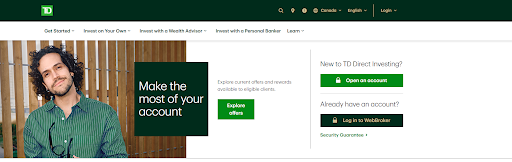
Charles Schwab, founded in 1971 and a pioneer of discount brokerage, is now the largest retail brokerage complex in the United States, and since May 2024 the sole home of the former TD Ameritrade client base and the thinkorswim platform. The combined firm offers self-directed brokerage, managed portfolios, banking, IRAs and 529s, futures and forex through its CFTC/NFA-registered arms, and a service model no rival matches at scale: 24/7 phone and chat with humans, plus a nationwide branch network.
For traders specifically, the value proposition is thinkorswim at zero platform cost. The desktop remains the reference standard for retail derivatives trading: the signature Risk Profile P&L graphs, custom studies via thinkScript, professional scanners with no scan limits, thinkBack backtesting, OnDemand replay of any historical trading day, and full futures and forex trading in the same window. StockBrokers.com ranked Schwab #1 Overall in its 2026 review, and options-focused reviewers continue to score thinkorswim 4.5 to 5 stars. The honest weak spots: US-centric market access (international reach is limited next to IBKR), margin loan rates among the most expensive in the industry, low default yield on idle cash, fractional shares limited to S&P 500 constituents, no spot crypto (futures and ETFs only), and a platform whose depth genuinely overwhelms beginners.
Interactive Brokers
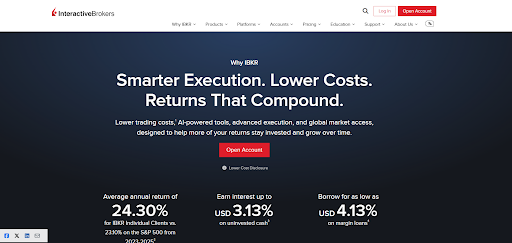
Interactive Brokers was founded in 1978 by market-making pioneer Thomas Peterffy and has spent five decades building the closest thing retail traders have to an institutional prime broker. Listed on NASDAQ with $21.3 billion in equity capital as of Q1 2026 and regulated by the SEC and FINRA in the US alongside the FCA, ASIC, MAS, SFC, CBI and other authorities through its global entities, IBKR serves clients in virtually every country with one unified account.
The proposition is breadth plus price. One login reaches 160 markets across 36 countries in 28 currencies: US and international stocks (with broad fractional-share support), options priced from $0.65 down to $0.15 per contract on tiered plans, futures at $0.85, spot cryptocurrency through regulated partners, bonds at near-institutional pricing, mutual funds, true ECN-style forex with spreads from 0.1 pips, and event contracts. Its cost engineering is the industry benchmark: margin rates around 4.9% (roughly half to a third of mainstream rivals), meaningful interest paid on idle cash (up to about 3.1 to 3.3% on larger balances), no inactivity or maintenance fees, and SMART order routing on IBKR Pro that hunts best execution across venues. NerdWallet named IBKR its 2026 best broker for advanced traders. The trade-offs are equally consistent across decades of reviews: a thorough (sometimes slow) account-opening process, platforms with a real learning curve, service that is competent but leaner than Schwab’s 24/7 machine, and a Lite tier whose commission-free routing uses payment for order flow.
Regulation & Safety
Both firms sit at the very top of the trust ladder, a different universe from the offshore CFD world.
Schwab is regulated by the SEC and FINRA for securities and the CFTC/NFA for futures and forex, carries SIPC protection ($500,000 per client, including $250,000 for cash) plus substantial excess-SIPC insurance, sweeps eligible cash to FDIC-insured banks, and stands behind accounts with a public satisfaction guarantee. As a NYSE-listed systemically significant financial firm with audited accounts, its balance-sheet transparency is total.
Interactive Brokers matches the US framework (SEC, FINRA, CFTC/NFA, SIPC plus excess coverage) and extends it globally through separately regulated entities in the UK, EU, Australia, Singapore, Hong Kong, Canada, Japan and India, with protections varying by the entity holding your account. Its capital position ($21.3 billion in equity, conservative automated risk management, decades of profitability) is a genuine differentiator, and it publishes monthly brokerage metrics with unusual transparency.
Trust verdict: a tie at the highest level available to retail traders anywhere. Choose on features and cost, not safety.
Trading Products
Schwab (TDA successor) covers the full US menu: all US-listed stocks and ETFs, 8,000+ mutual funds (thousands no-transaction-fee), the complete US options universe including index options, CME futures and micro futures, spread-based forex on dozens of pairs, bonds and CDs, and crypto exposure via futures and spot ETFs, but no direct coin ownership. International access exists through the Schwab Global Account in a limited set of foreign markets, adequate for occasional ADR-plus needs, not for a genuinely global strategy. Fractional shares (Stock Slices) cover only S&P 500 names.
Interactive Brokers is the global department store: 160 markets’ worth of stocks and ETFs from Tokyo to Toronto to Frankfurt, options on US and international underlyings, futures on 30+ exchanges worldwide at $0.85 per US contract, spot crypto alongside crypto derivatives, a bond desk spanning treasuries, corporates and munis with transparent markups, forex as a true multi-currency asset (convert, hold and earn interest in 28 currencies), broad fractional shares, and even CFDs and other products for non-US clients through international entities. If it trades on a major exchange anywhere, IBKR probably routes to it.
Verdict: Schwab fully satisfies a US-focused trader; IBKR is untouchable for global reach, spot crypto, bonds and multi-currency needs.
Trading Platforms
This is a matchup of the two most capable platform stacks in retail brokerage, with opposite personalities.
thinkorswim (Schwab) remains, in our experience, the best free discretionary trading platform ever shipped. The desktop’s Risk Profile graphs make complex options positions visually intuitive; thinkScript lets you code custom studies and strategies without leaving the platform; scanners, thinkBack backtesting and OnDemand full-market replay support serious preparation; and paperMoney offers unlimited real-time simulation, the industry’s gold-standard practice environment. Web and mobile versions carry remarkable feature parity. Its personality is trader-craftsman: everything visual, everything customizable, everything in one window. The cost is cognitive: newcomers face a steep, sometimes intimidating learning curve, and power users note it is engineered for discretionary trading rather than API-driven automation.
Interactive Brokers counters with an arsenal: Trader Workstation (TWS), the famously dense professional terminal with algos, option strategy labs, portfolio margin tools and risk navigators; the newer IBKR Desktop, a cleaner modern alternative; Client Portal for web simplicity; IBKR Mobile and the beginner-oriented GlobalTrader app; and, decisively for quants, full API coverage (REST, FIX, Python and more) that makes IBKR the default brokerage back-end for retail algorithmic trading worldwide. Its personality is engineer-institutional: less beautiful than thinkorswim, vastly more automatable, and improving in usability each year.
Verdict: discretionary chartists and options visualizers will prefer thinkorswim; systematic, multi-market and API traders will prefer IBKR. Both offer excellent paper trading for a risk-free test drive, which is genuinely the right way to choose.
Trading Costs
Stocks and ETFs. Both charge $0 for online US-listed stock and ETF trades (IBKR via its Lite plan; its Pro plan charges from $0.0035 to $0.005 per share with a $1 minimum in exchange for SMART-routed execution quality and rebate opportunities that active traders often net-profit from). Schwab charges $6.95 for OTC penny stocks; IBKR handles OTC at its per-share schedule.
Options. Parity at the headline: $0.65 per contract at both, with no exercise or assignment fees at either, a detail that matters enormously for spread traders. IBKR’s tiered plan drops toward $0.15 per contract at volume, undercutting Schwab for very active options traders; capped-commission rivals (tastytrade, itself now an IG-family sibling) undercut both for large lot counts.
Futures. The clearest gap: $0.85 per contract at IBKR versus $2.25 per side at Schwab, before identical exchange fees. A 200-round-turn-per-month futures trader saves roughly $560 monthly at IBKR on commissions alone. Dedicated futures specialists (AMP and peers) go lower still, but between these two, IBKR wins outright.
Margin. The decision-making gap for anyone who borrows: IBKR’s benchmark-linked rates sit around 4.9% in mid-2026, versus Schwab’s posted base tiers above 11%. On a $100,000 margin loan, that difference is roughly $6,000+ per year. There is no strategy of moderate leverage for which Schwab’s margin pricing is competitive.
Cash and forex. IBKR pays up to about 3.1 to 3.3% on larger idle cash balances; Schwab’s default sweep yields little unless you actively buy money funds (which, to be fair, Schwab’s excellent SWVXX-type funds make easy). Forex at IBKR is ECN-style (spreads from 0.1 pips plus roughly $2 minimum commissions per trade); Schwab’s forex is spread-based and wider. Currency conversion at IBKR costs institutional rates, a quiet fortune saved for anyone moving money internationally.
Non-trading fees. Neither charges inactivity, platform, data (standard tiers) or maintenance fees on regular accounts. Wire and paper-statement fees apply at both in the usual ways.
| Cost Item | Schwab (TDA successor) | Interactive Brokers |
|---|---|---|
| US stocks/ETFs | $0 | $0 (Lite) / from $0.0035/share (Pro) |
| Options | $0.65/contract | $0.65 standard, to $0.15 tiered |
| Futures | $2.25/contract/side | $0.85/contract |
| Margin rate | Approx. 11%+ base | Approx. 4.9% |
| Idle cash yield | Low default sweep | Up to ~3.1 to 3.3% (larger balances) |
| OTC stocks | $6.95 | Per-share schedule |
| Inactivity fee | None | None |
Cost verdict: near-parity for a cash-account stock-and-options trader; decisively IBKR for futures, margin, cash yield, forex and anything international.
Account Types
Schwab offers the full American financial-life menu: individual and joint brokerage, traditional/Roth/SEP/SIMPLE IRAs, trusts, custodial and 529 education accounts, small-business plans, checking and savings via Schwab Bank, plus managed solutions (Intelligent Portfolios robo and advisory tiers). Futures and forex approval layers onto the same login. paperMoney simulation is unlimited.
Interactive Brokers offers individual and joint accounts, IRAs, trusts, UGMA/UTMA, corporate and institutional structures, and uniquely deep professional plumbing: advisor and money-manager master accounts, hedge-fund infrastructure, and the Interactive Advisors managed marketplace (fees 0.10 to 0.75%). Account plans split into IBKR Lite (US/Singapore residents, commission-free US stocks) and IBKR Pro (global, per-share pricing, best execution, full rates on cash). Paper trading accounts mirror live functionality.
| Account Feature | Schwab | Interactive Brokers |
|---|---|---|
| IRAs / retirement | Yes, full range | Yes |
| Banking integration | Yes (Schwab Bank) | Multi-currency cash, debit card (US) |
| 529 / custodial | Yes | Custodial yes; no 529 |
| Advisor/institutional infrastructure | Yes | Industry-leading |
| Pricing plans | Single schedule | Lite / Pro |
| Paper trading | paperMoney (best in class) | Yes |
Deposits & Withdrawals
Both operate standard US rails, ACH (free, 1 to 3 days), wires (fees apply), and check deposits, with no deposit or withdrawal fees on ACH at either. IBKR adds its global dimension: fund in any of 28 currencies, convert at near-interbank cost, and withdraw internationally with one free withdrawal per month, which makes it the obvious choice for expats and cross-border earners. Schwab counters with instant internal movement across brokerage and Schwab Bank, branch cash services and unlimited ATM-fee rebates worldwide on its debit card, unbeatable domestic convenience.
Research & Education
Schwab inherits and extends two research cultures: Schwab’s own equity ratings and market commentary plus the TDA legacy of trader-focused content, with Morningstar, Argus and news integrations, powerful screeners in thinkorswim, and an education library (articles, courses, coaching, the schwab.com learning center) that remains among the friendliest paths from beginner to intermediate anywhere. 24/7 human support completes the hand-holding.
Interactive Brokers publishes IBKR Campus (courses, the Traders’ Academy, quant-leaning webinars), offers a fundamentals explorer, global scanners and a huge menu of subscribable third-party research, much of it aimed at users who already know what they are looking for. It informs superbly; it teaches adequately.
Verdict: Schwab for learning and guided service; IBKR for raw data breadth and quant resources.
Customer Support
Schwab: 24/7 phone and chat with licensed humans, trader-desk specialists for thinkorswim, futures and forex questions, plus physical branches, a service model no pure-online broker matches. Post-migration reviews note occasional wait-time spikes, but the structural advantage is real.
Interactive Brokers: weekday-focused phone, chat and a well-built ticket system across global service centers, competent and improving, historically the firm’s weakest suit relative to its excellence elsewhere. Self-sufficient traders rarely mind; hand-holding seekers will.
Verdict: Schwab, clearly.
Mobile Trading Experience
thinkorswim mobile is the most complete trader app in US brokerage: full options chains with analytics, futures and forex, custom charts with studies, alerts and paperMoney on your phone, alongside the simpler Schwab app for investors.
IBKR Mobile delivers astonishing scope (global markets, options strategies, bonds, crypto, currency conversion) with strong security, in an interface reviewers describe as capable but busier; GlobalTrader offers a cleaner beginner alternative.
Verdict: thinkorswim mobile for trading feel; IBKR for mobile access to everything, everywhere.
Pros & Cons
TD Ameritrade (now Charles Schwab)
Pros
- thinkorswim: the best free retail trading platform, preserved intact post-migration
- $0 stocks/ETFs, $0.65 options with no exercise/assignment fees
- paperMoney unlimited real-time simulation; thinkScript; OnDemand replay
- 24/7 human support, branches, banking, #1 Overall 2026 industry ranking
- SIPC plus excess coverage within a NYSE-listed giant
- Best-in-class education for developing traders
Cons
- Margin rates around 11%+, among the industry’s costliest
- Futures at $2.25/side, nearly triple IBKR
- Low default yield on idle cash; fractional shares limited to S&P 500 names
- US-centric market access; no spot crypto
- thinkorswim’s depth overwhelms true beginners
- Migration-era friction still echoes in some user reviews
Interactive Brokers
Pros
- Margin around 4.9% and futures at $0.85/contract: unmatched cost engineering
- 160 markets, 36 countries, 28 currencies from one account
- Interest up to ~3.3% on idle cash; institutional-grade forex and bonds
- Spot crypto plus the broadest fractional-share coverage
- Full API stack: the default choice for algorithmic retail trading
- $21.3B equity capital, global tier-1 regulation, no inactivity fees
Cons
- Learning curve across TWS and account management; thorough onboarding
- Customer service leaner than Schwab’s 24/7 branch-backed model
- IBKR Lite uses payment for order flow; best execution requires Pro
- No banking/529 ecosystem; education more technical than nurturing
- Options analytics and paper-trading UX trail thinkorswim’s polish
- Tiered pricing takes study to optimize
Who Should Choose TD Ameritrade (Schwab)?
Stay with, or choose, Schwab if you are a US-focused discretionary trader or developing investor who trades mostly with cash rather than borrowed money. Options traders get thinkorswim’s unmatched visual analytics with no assignment fees; futures dabblers get micro contracts inside the same beloved platform; learners get paperMoney, the education library and 24/7 humans; and households get the convenience of brokerage, retirement, banking and branches under one roof. Former TDA clients whose workflow lives in thinkorswim lose nothing by staying, and the platform alone justifies the choice for anyone whose edge is chart-and-chain craftsmanship rather than cost-shaving.
Who Should Choose Interactive Brokers?
Choose IBKR if arithmetic drives you. Margin users save thousands annually at 4.9% versus 11%; futures traders cut per-contract costs by more than 60%; large cash balances earn instead of idling; and international investors get the only US broker where Tokyo, London and Sydney listings sit natively beside NYSE in one multi-currency account. Algorithmic traders should not even hesitate: the API ecosystem has no US retail rival. It is also the pragmatic pick for expats, high-net-worth cost optimizers and anyone who wants spot crypto and institutional bond pricing next to their equities. Budget a weekend for the learning curve; it pays for itself quickly.
Final Verdict
The old TD Ameritrade vs Interactive Brokers debate survives its protagonist’s absorption intact, because thinkorswim survives, and so does the fundamental trade-off.
Schwab, TD Ameritrade’s successor, wins on experience: the finest discretionary platform, the strongest service and education, and full-service ecosystem convenience, at prices that are excellent for cash-account stock and options trading and poor for everything involving borrowing, futures volume or idle cash.
Interactive Brokers wins on economics and reach: materially cheaper leverage, futures and forex, yield on cash, and a planet’s worth of markets and automation, at the price of a steeper curve and leaner service.
A practical closing thought from experience: many serious US traders simply run both, thinkorswim (via Schwab) for analysis, options and simulation, IBKR for margin, futures, international and automated execution. Both offer free paper trading; test-drive each before committing real capital, and remember that active trading, particularly with options, futures and margin, carries substantial risk of loss regardless of how excellent the broker is.
Frequently Asked Questions
Is TD Ameritrade still a broker in 2026?
No. Charles Schwab completed the migration of all TD Ameritrade accounts in May 2024 and retired the TD Ameritrade platform and brand. The thinkorswim platform survived fully intact and is now free to all Schwab clients. Any current “TD Ameritrade vs Interactive Brokers” decision is really Schwab vs IBKR.
Did thinkorswim survive the Schwab merger?
Yes, completely. thinkorswim desktop, web and mobile, including paperMoney paper trading, thinkScript, OnDemand replay and the full scanner and options analytics suite, operates under Schwab with no platform fees, no data fees for standard use and no minimum balance.
Which broker is cheaper?
For cash-account US stock and options trading, they are nearly identical ($0 stocks; $0.65 options with no exercise/assignment fees at both). Interactive Brokers is decisively cheaper for futures ($0.85 vs $2.25 per contract), margin borrowing (around 4.9% vs 11%+), forex and currency conversion, and it pays up to about 3.3% on idle cash where Schwab’s default sweep pays little.
Which platform is better, thinkorswim or Trader Workstation?
For discretionary and options trading, thinkorswim: its Risk Profile graphs, scanners and paperMoney remain the retail gold standard. For automation, multi-market and professional workflows, IBKR’s TWS/IBKR Desktop plus its full API stack win. Both brokers offer free paper trading, so testing both costs nothing but time.
Can I trade international stocks?
Meaningfully only at Interactive Brokers, which offers direct access to 160 markets in 36 countries with multi-currency cash handling. Schwab’s international reach is limited to a modest set of markets via its Global Account plus ADRs, fine for occasional needs, inadequate for global strategies.
What about crypto?
Interactive Brokers offers spot cryptocurrency trading through regulated partners alongside crypto futures and ETFs. Schwab offers no spot crypto, only crypto futures and spot-crypto ETFs.
Which is safer?
Both sit at the top of the industry: SEC/FINRA regulation, SIPC protection ($500,000 including $250,000 cash) plus excess-SIPC insurance, and public listings with audited accounts (NYSE: SCHW; NASDAQ: IBKR, with $21.3 billion in equity capital). Safety should not be the deciding factor between them.
Which is better for beginners?
Schwab, for its education library, 24/7 human support, branches and paperMoney, though thinkorswim itself takes effort to learn. IBKR’s GlobalTrader app softens its curve, but the ecosystem assumes more self-sufficiency. Complete novices might reasonably start at Schwab and add IBKR when costs or global access start to matter.
What are IBKR Lite and IBKR Pro?
Lite (US and Singapore residents) offers commission-free US stocks/ETFs routed via payment for order flow. Pro charges small per-share commissions (from $0.0035) with SMART routing for best execution, lower margin rates and full interest on cash. Active and larger traders almost always net out better on Pro.
Do either charge inactivity or platform fees?
No. Neither Schwab nor Interactive Brokers charges inactivity, maintenance or platform fees on standard accounts, and both start from $0 minimums. IBKR removed its legacy inactivity fee in 2021.
Which is better for futures trading?
Interactive Brokers between these two, at $0.85 per contract versus Schwab’s $2.25 per side, though thinkorswim’s futures trading experience is arguably nicer. Dedicated futures brokers (AMP and similar) undercut both on commissions and margins for specialists.
Should former TD Ameritrade clients switch to IBKR?
Only if the economics say so. If you trade on margin, trade futures at volume, hold large cash balances, need international markets or automate strategies, IBKR’s savings are large and real. If your trading lives inside thinkorswim with cash-account stocks and options, staying with Schwab costs you essentially nothing and keeps the better platform and service.
Risk warning: Trading stocks, options, futures and forex involves substantial risk of loss and is not suitable for all investors. Options and futures trading requires approval and involves complex risk; margin borrowing magnifies both gains and losses; past performance does not guarantee future results. This article is for informational purposes only and does not constitute investment advice. Verify all pricing and terms on the official Charles Schwab and Interactive Brokers websites, and consult FINRA BrokerCheck for current regulatory records before opening an account.